
Key Takeaways
- Site analysis is the foundation of a successful Bali villa project, helping identify risks (poor layouts, flooding issues, blocked views, legal complications, and inefficient use of the land), opportunities, and design constraints before construction begins.
- Factors such as topography, climate, sunlight, airflow, drainage, zoning, and surrounding developments can significantly impact both design quality and construction costs.
- The process involves site visits, climate and zoning assessments, utility checks, and translating findings into design decisions that suit the land’s unique characteristics.
Before designing your villa, your Bali-based architectural team should first conduct a site analysis and discuss the findings with you.
Site analysis in architecture means studying a piece of land before designing a building on it. This includes examining its strengths, limitations, risks, and opportunities. The goal is to make sure the land is suitable for the villa you want to build.
Below, we explain the process and what you should prepare to ensure a smooth discussion with your local architect team.

Why Site Analysis Matters Before Building a Villa in Bali?
Architectural site analysis is more than just a technical step. It helps manage risks for your Bali villa project.
Building a villa in Bali differs from building in many other countries due to its unique tropical climate. For example, a villa near the coast may require specific materials to resist salt air and damage, while a villa built near a mountain must have a layout that can support it on sloping land.
Without proper site analysis, a villa might look great on paper but cause problems later. Some common issues we have seen in poorly designed villas include:
- A villa may feel too hot because it faces the wrong direction.
- Poor drainage may cause flooding during the rainy season.
- A steep site may increase foundation and construction costs.
- A small access road may make material delivery difficult.
- A nearby building may block views or sunlight.
- The land zone may not support the intended use of the villa.
Read More: How to Find the Best Architecture Companies in Bali (Practical Guide)
Key Elements of Bali Villa Architectural Site Analysis
A good architectural site analysis for a Bali villa project usually covers several important points:
1. Location and Surrounding Context
This sounds obvious, but location means more than just an address. Every area in Bali has its own character, for example, Uluwatu can have steep, cliffy terrain. Meanwhile Ubud might have jungle, ancient trees, and cultural sites nearby.
Your architect will visit the site and look at what’s around it: the roads, the neighboring buildings, nearby beaches or cafés, how much privacy you have, and what the future of the surrounding area might look like. All of this shapes how your villa should be designed before anything else is decided.
2. Land Shape and Size
Not every plot of land is easy to work with. Some are long and narrow. Some are wide but hard to access. Some have an awkward shape that makes standard layouts impossible.
This is important because the land should shape the design, not the other way around. For example, a narrow plot might work best with rooms arranged in a line, while a wider plot could allow for a courtyard. A corner plot gives you more options for access.
3. Topography and Slope
Bali is not completely flat. Places like Uluwatu, Ubud, and Tabanan often have steep slopes, and how you deal with these slopes can make a big difference in both cost and the feel of your finished villa.
A sloped site can be beautiful. It allows for split-level designs, dramatic views, and architecture that seems to grow from the hillside. However, it also requires more planning, including retaining walls, drainage systems, and stronger foundations.
4. Sun, Light, and Heat
Bali is near the equator, so the sun is strong all year. The direction your villa faces and how the rooms are positioned relative to the sun have a significant effect on how comfortable it is to live there.
Your Bali architect will consider where sunlight comes from at different times of day and design the villa to suit. They use shade, roof overhangs, and smart window placement to keep the villa bright and pleasant without making it feel too hot.
Read More: Why Bali Villas Are Built for Open-Plan Living (And How to Choose Yours)
5. Airflow and Natural Ventilation
In a tropical climate, airflow is very important. A villa that naturally catches the breeze will feel cooler, fresher, and more connected to its surroundings. You will also need less air conditioning, which is better for comfort and saves on running costs.
This is why architects think about where the wind comes from and how air moves across your property. The placement of windows, doors, open courtyards, and even ceiling heights all play a role in keeping the villa feeling alive and breezy rather than stuffy and closed off.
6. Soil and Ground Conditions
The type and quality of soil on your land will determine what kind of foundation your villa needs. Foundation work can be one of the biggest factors in construction costs.
Soft, wet, or unstable soil may need a more complex and expensive foundation system. In some cases, professional soil testing is conducted before any design work begins. It’s better to know this early than to discover it halfway through construction.
7. Rain and Drainage
Bali’s wet season brings heavy rain, and a plot of land that seems fine in July can look very different in January. It’s important to understand how rainwater moves across and off your land:
- Does water collect in certain spots?
- Is there a risk of flooding?
- How does water drain away from the building?
You need to answer those questions before starting the design, because poor drainage can lead to serious problems later, such as water damage, mold, garden erosion, and ongoing maintenance issues.
8. Access and Circulation
Access is very important in Bali because some roads are narrow and difficult for cars. Others have shared access with neighbors, or laneways that aren’t suitable for large construction vehicles.
This affects not just construction logistics, but also the everyday experience of living in or renting out your villa. Guests arriving for a holiday don’t want to navigate a difficult, dark alley to reach what’s supposed to be a luxury escape.
9. Utilities and Infrastructure (Water, Electricity, and the Basics)
It’s easy to assume that utilities are always available, but in some of Bali’s developing areas, access to clean water, electricity, and wastewater systems isn’t always available.
Your architect and project team need to know what’s already available at the site and what will need to be brought in or built. This can affect both the cost of construction and the long-term ease of running the villa.
10. Land Zoning and Building Rules
This is one of the most important questions, and many first-time buyers in Bali miss it.
Different areas have different zoning rules. Some land is designated for residential use, some for tourism, and some is protected or classified as agricultural land. Building height limits, setbacks from the road, and required permits all vary depending on where you are and what you’re building.
If you plan to rent your villa out commercially, there may be extra requirements beyond the usual residential rules. Sorting out the legal details early, ideally with a qualified local professional, can help you avoid expensive surprises later.
11. Views, Privacy, and Noise
A villa is more than just a building. It’s also about how it feels. That’s why site analysis also studies sensory factors, such as:
- Best views
- Privacy from neighbors
- Noise from roads, clubs, construction, or temples
- Smell from nearby drainage or waste areas
- Light pollution
- Surrounding atmosphere
For that matter, your architect will identify sources of noise, such as a busy road, a nearby club, or temple ceremonies, and place bedrooms and quiet areas away from these spots. They will think about how to create privacy without making the villa feel closed off.
12. Culture and Local Environment
Bali has a deep cultural identity, and building here comes with a responsibility to be aware of that.
Your land might sit near a temple, beside a rice field, or within a traditional village. Ceremonies happen. Sacred spaces exist. Local communities have their own rhythms and patterns.
This does not mean your villa must look traditional, but the design should respect its location. Keeping existing trees when possible, paying attention to scale and orientation, and working with people who know the local context all help create a villa that feels like it belongs in Bali.

How to Do a Site Analysis for Your Bali Villa Project
1. Gather the Basic Information
Your architect and project team will collect any available documents and data. Things like the land certificate, boundary details, size, zoning classification, road access, and any existing survey drawings.
This gives the team an initial idea of what they know on paper before they visit the land in person.
2. Visit the Site
No amount of Google Maps or satellite images can replace actually being on the land. Visiting the site helps your team see the actual conditions, such as road noise, wind direction, the best views, nearby buildings, old trees worth keeping, and how private the area feels.
Sometimes your team may visit the site several times at different times to observe morning, afternoon, and evening conditions. The environment can change during the day, and those changes are important when deciding where to place rooms, windows, and outdoor areas.
3. Understand the Climate
Bali is tropical, and that affects every part of villa design. Your architect will look at how heat, humidity, rain, and sunlight impact your specific site:
- Where does the afternoon sun hit hardest?
- Where does shade naturally fall?
- How does rain drain off the site?
These answers shape decisions about roof design, pool placement, how living spaces are arranged, and how to make outdoor areas comfortable all year round.
4. Check the Legal and Zoning Rules
A stunning Bali villa concept means nothing if the land isn’t legally permitted for what you have in mind. So, before the design moves too far forward, zoning status and relevant permits need to be confirmed — ideally with a local professional who genuinely understands the rules in that specific area.
Read More: Building a Villa in Bali? Here’s the Permits You Need
5. Put It All Into Diagrams
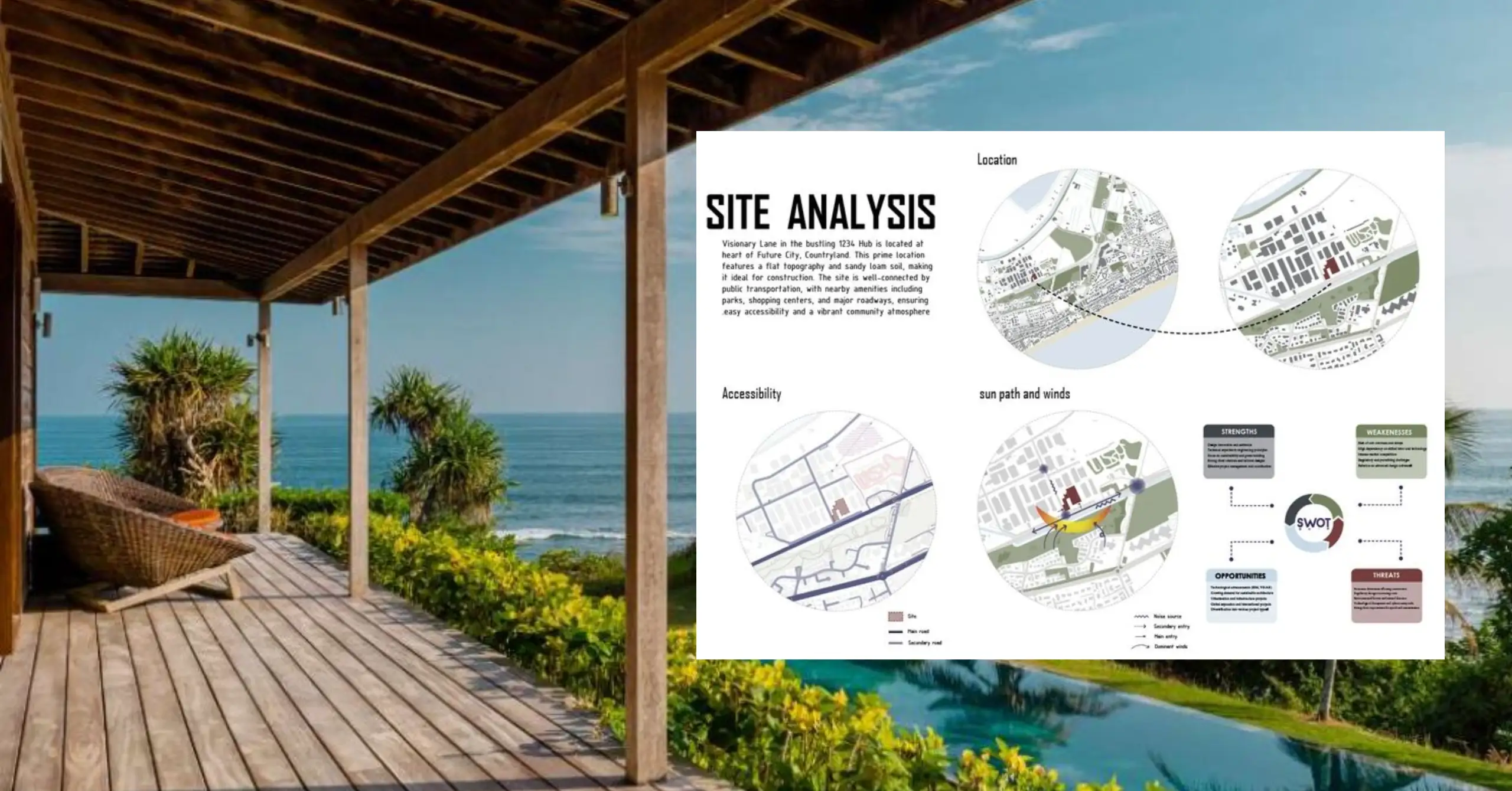
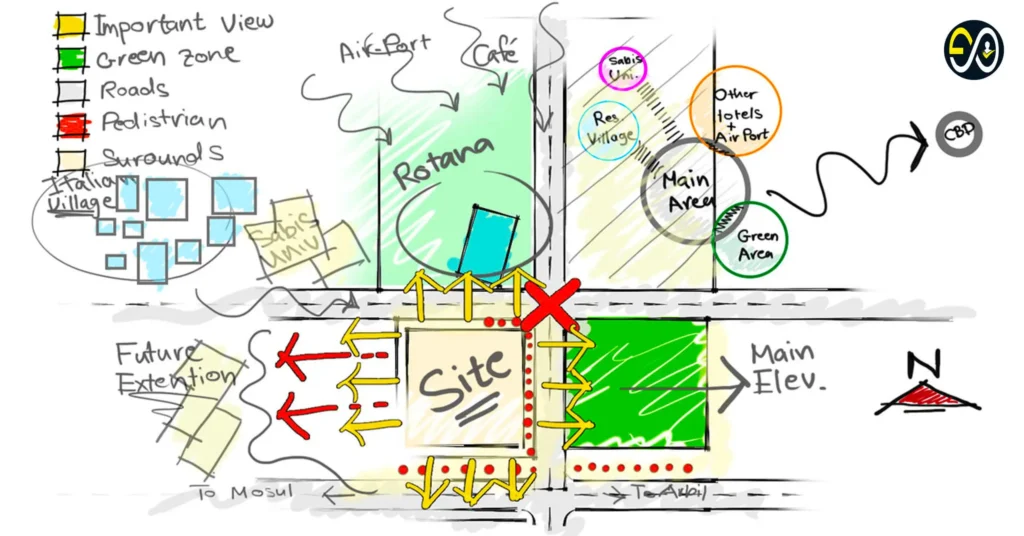
Once all the information is gathered, your architect will translate it into clear visual diagrams; showing things like sun direction, wind flow, drainage, slopes, and noise sources. These diagrams become the map that guides every design decision that follows.
You’ll typically be walked through the findings at this stage, so you have a clear picture of your land’s real conditions before anything is designed.
6. Turning Insight Into Design Decisions
This is where site analysis shifts from research into real architecture. Every finding from the earlier steps becomes a chance to design something smarter and more considered.
Site Analysis Checklist for Designing a Villa in Bali
Here is a simple checklist to discuss with your property architect before designing a draft:
- Is the land suitable for the type of villa you want?
- What is the zoning status?
- Is the road access good enough for construction and future use?
- Is the land flat, sloped, or irregular?
- Is there any flood or drainage risk?
- What are the best views?
- Where does the sun hit the land most strongly?
- Where does the wind come from?
- Are utilities available?
- Are there existing trees or natural features worth keeping?
- Are there nearby noise sources?
- Are there future developments nearby?
- What permits or approvals may be needed?
- What construction challenges may affect cost?
Simple Ways to Get Your Villa Design and Planning Right
You don’t have to figure this out alone. Many foreigners building in Bali start by working with a local architect who knows the land, the permits, and the design process. They can guide you through each step with confidence.
That’s what iLot architecture is here for.
We take care of everything, from site analysis and design to permits and construction. We keep our communication clear and simple, so you always know what’s happening and stay in control seamlessly.
If you want to discuss your project, you can book a free consultation with us anytime. No commitment required.
Conclusion
Site analysis might sound like an extra step, but it’s actually the foundation of a well-designed villa. Understanding your land before designing on it leads to better layouts, smarter decisions, and far fewer surprises during construction.
And you don’t have to navigate any of it alone. iLot Property Bali is here to help you from the very start. Schedule your complimentary consultation anytime, no commitment required.
FAQ
While some AI tools now offer the ability to generate site plans, relying on them is not recommended because the calculations and site data may not be accurate. Site analysis should be handled by experienced professionals who understand Bali’s unique conditions, regulations, climate, and terrain. This helps prevent costly mistakes, design issues, and unexpected challenges later in the project.