
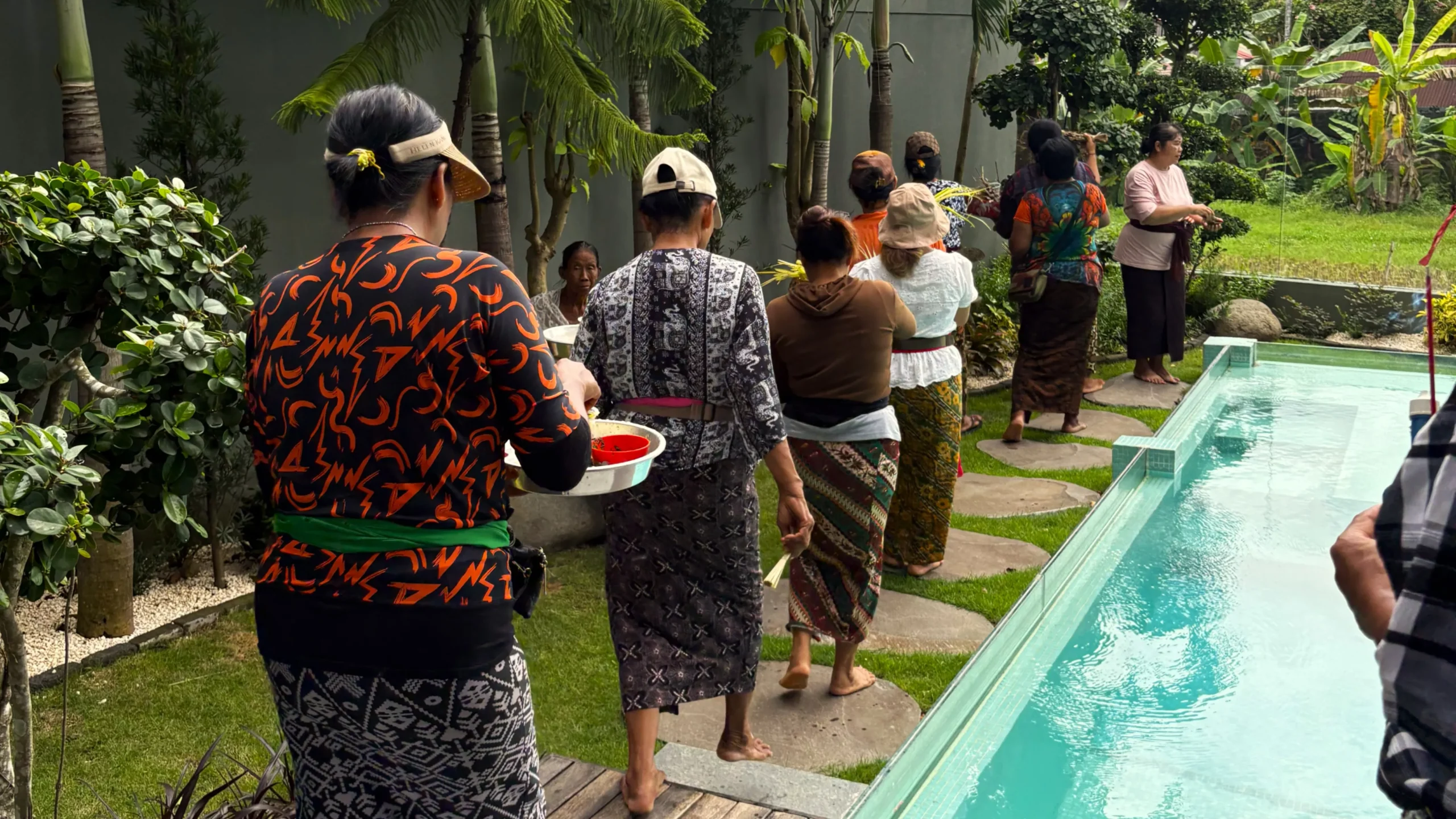
Disclaimer: This article is written by our foreign intern based on her personal experience attending a Melaspas ceremony at one of iLot Property Bali’s projects.
Key Takeaways
- The Melaspas ceremony is a traditional Balinese Hindu ritual performed to cleanse and bless a newly completed building before it is occupied.
- The ceremony aims to remove spiritual impurities (leteh) and restore harmony between people, nature, and the divine.
- Melaspas is not only practiced by Balinese families; today, many foreign homeowners in Bali also choose to perform the ritual for blessing their villas.
- The ceremony involves a priest, sacred offerings (banten), holy water, prayers, and blessings for the building and its future occupants.
Every time a new building is completed in Bali, the next step is to bless it through the Melaspas ceremony. It is a traditional Balinese Hindu ceremony performed before a villa is ready to be occupied, rented out, or handed over to guests.
Interestingly, this ceremony is not only performed by locals. Foreign property owners also sometimes choose to bless their new villas through Melaspas, which restores balance by cleansing the space of impure energy (known as leteh in Balinese) that may have accumulated during construction.
Last week, as someone newly living in Bali, I had the chance to attend one. The villa was built by our real estate development company, iLot Property Bali, and is owned by a Belgian homeowner who has already settled in Bali.
I wasn’t involved in the ceremony itself, but I spent time quietly observing the process—watching the preparations, the offerings, the priest, and the villa owner’s family working together. Here’s the full story.

What is Melaspas Ceremony and Why Is It Important?
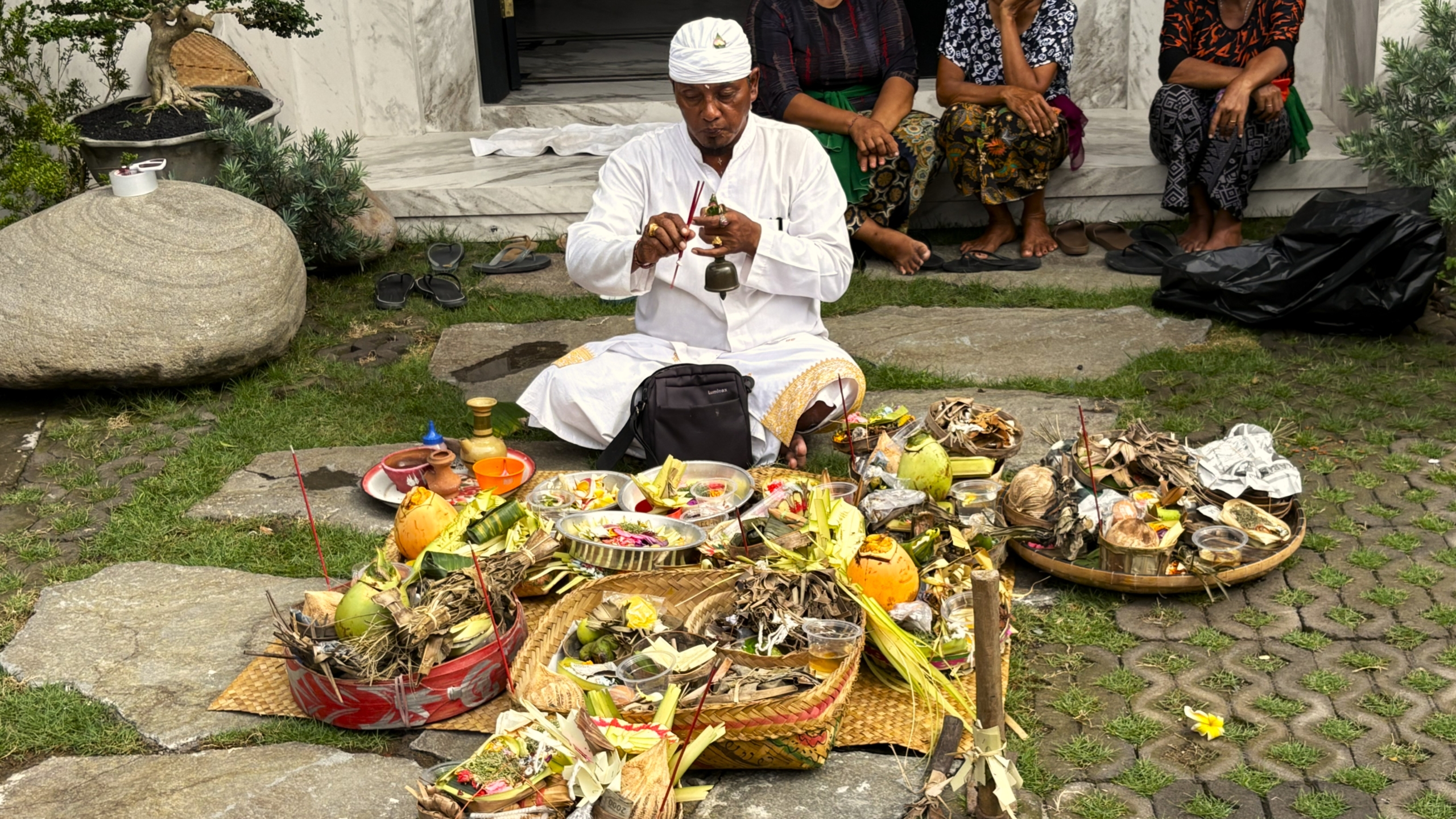
Melaspas is a ritual intended to cleanse a building of spiritual impurities and prepare it to receive positive energy. The term comes from two Balinese words: Melas, meaning “to cleanse,” and Pas, meaning “to return to purity.”
The main purpose of this ceremony is to ensure that a space—whether a house, temple, villa, or office—is spiritually safe and harmonious before it is occupied.
The Melaspas ceremony must be led by a priest. Some ceremonies are conducted by a pemangku (temple priest), while larger or more formal ceremonies may require a pedanda (high priest). The choice of priest depends on factors such as the size of the building and the status of the family.
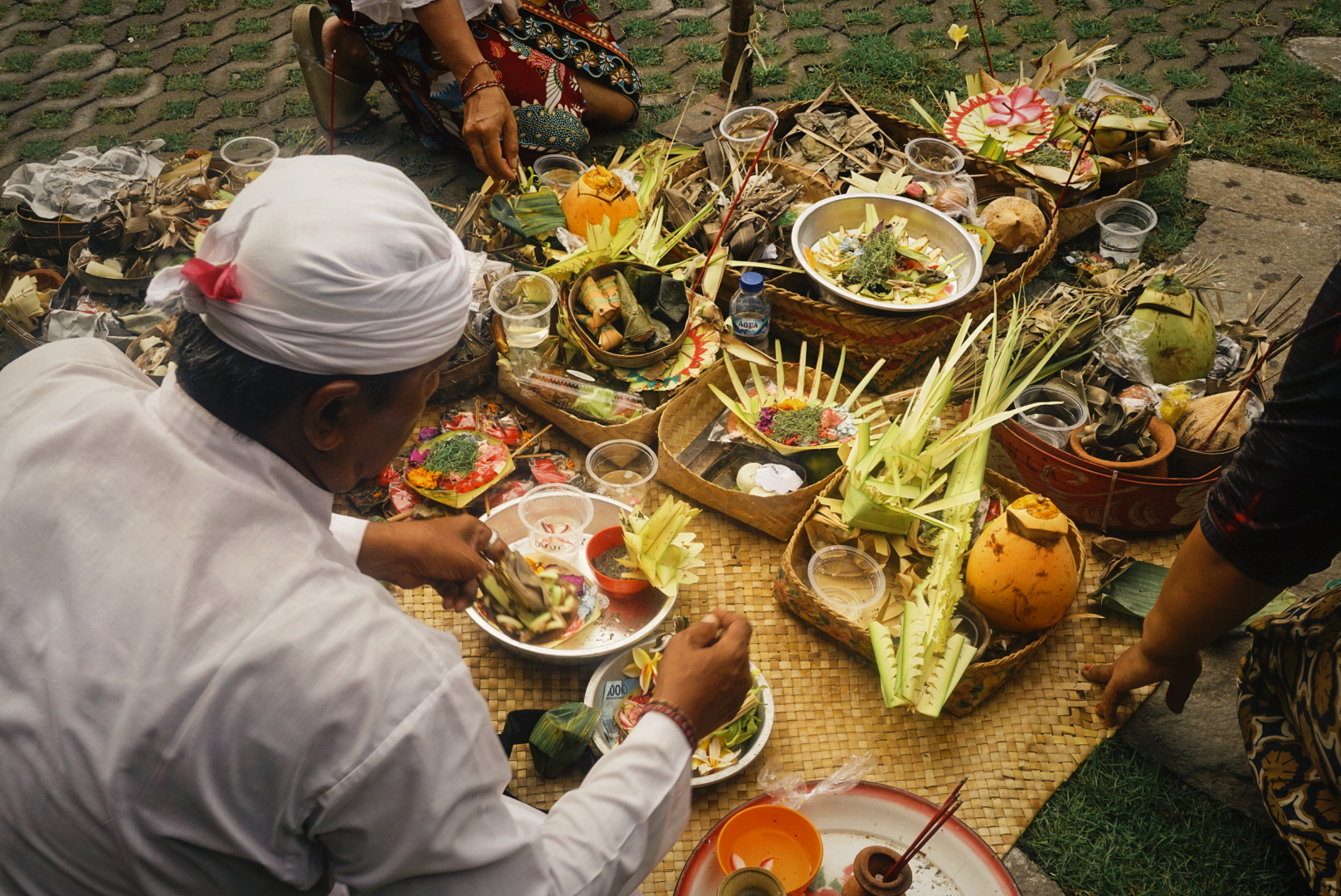
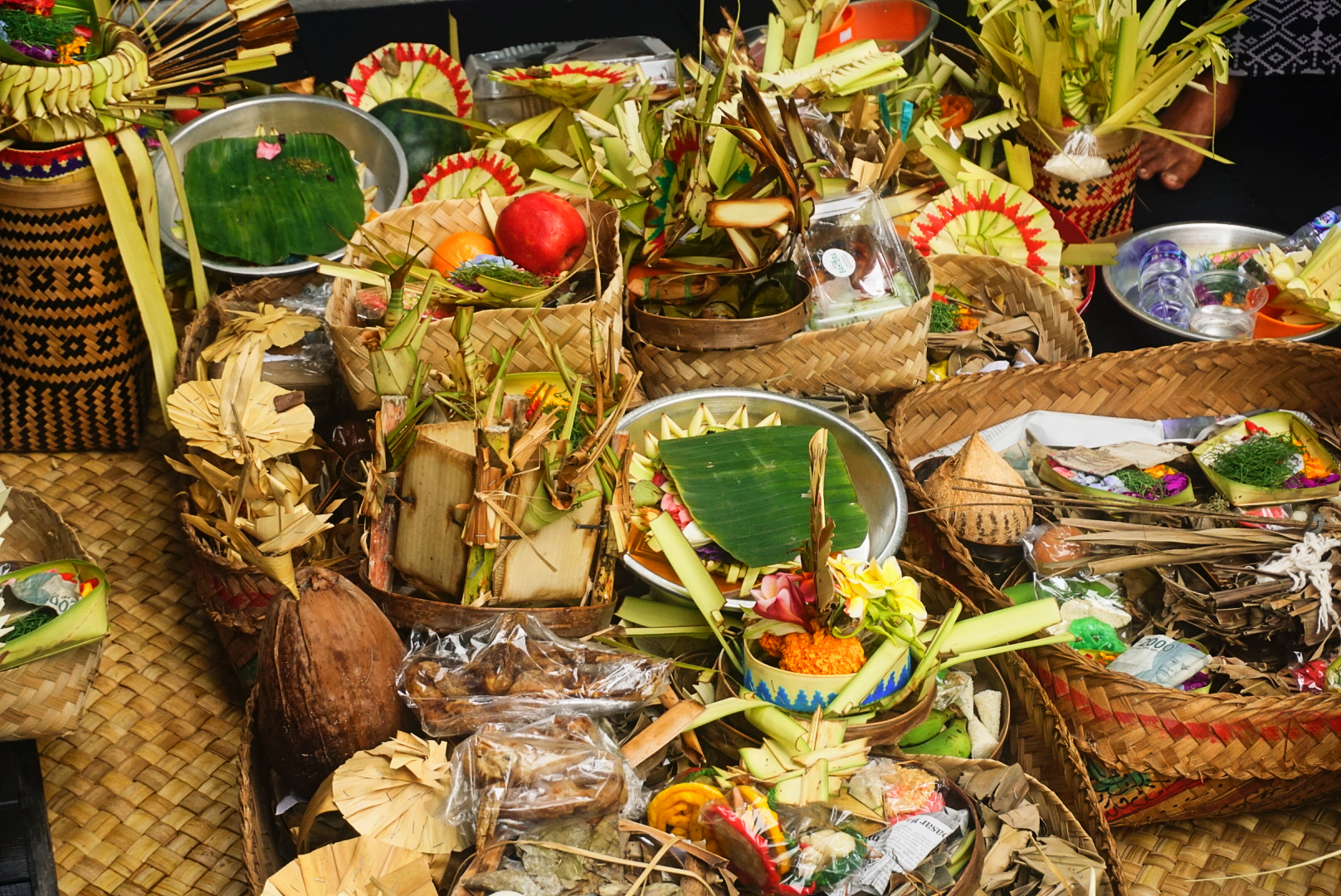
Unlike daily offerings such as canang sari, which can be prepared and offered by anyone, Melaspas involves more complex offerings with specific purposes, including:
- Offerings for Overall Purification and as Witnesses to the Ceremony: Pejati, Prayacita, Durmanggala, Biukaon, and Pengulapan
- Main Offerings: Suci Sari (Banten Saraswati), Sesayut, and Ayaban Tumpeng
- Offerings for the Purification Process (Pecaruan): Segehan Agung, Caru Ayam Brumbun (white chicken offerings), and Pedagingan
- Complementary Offerings and Symbols of Prayer and Communication: three types of Banten Ori are placed at the corners of the building: Orti Temu, Orti Ancak, and Orti Bingin
Read More: The Ultimate Guide to Property Management in Bali
The Philosophy Behind Melaspas
One thing I love about Bali is that almost everything has a deeper meaning behind it, even building a house. The Melaspas ceremony is rooted in a Balinese philosophy called Tri Hita Karana, which basically means “the three ways to create harmony.”
It’s all about keeping a good balance between:
- Gods: staying spiritually connected
- People: living in peace with others
- Nature: respecting the environment around you
Melaspas ties all of this together. It’s like saying, “This new building is ready, now let’s make sure it’s in harmony with everything around it.” It’s a reminder that a home or villa isn’t just walls and floors, but part of a bigger universe.
Another idea that shows up in this ceremony is Rwa Bhineda, which is the Balinese version of yin and yang.
Life always has two sides, which are good and bad, clean and unclean, and both are natural. The ceremony helps shift the energy toward balance, so the space starts off on the right foot.
In a way, Melaspas feels like pressing a spiritual reset button before anyone steps inside. It also serves several other purposes:
- Inviting Protective Energies: During the ceremony, the priest invites positive forces and guardian spirits to protect the occupants.
- Giving the Building a “Soul” (Taksu): In Balinese spirituality, everything—objects, tools, and spaces—can have taksu, a kind of spiritual charisma or life force. Melaspas activates this quality, allowing the building to feel “alive” and energetically aligned.
- Showing Gratitude and RespectL The ritual expresses gratitude to the gods and the elements for providing the materials and land needed to build.
Steps in a Melaspas Ceremony
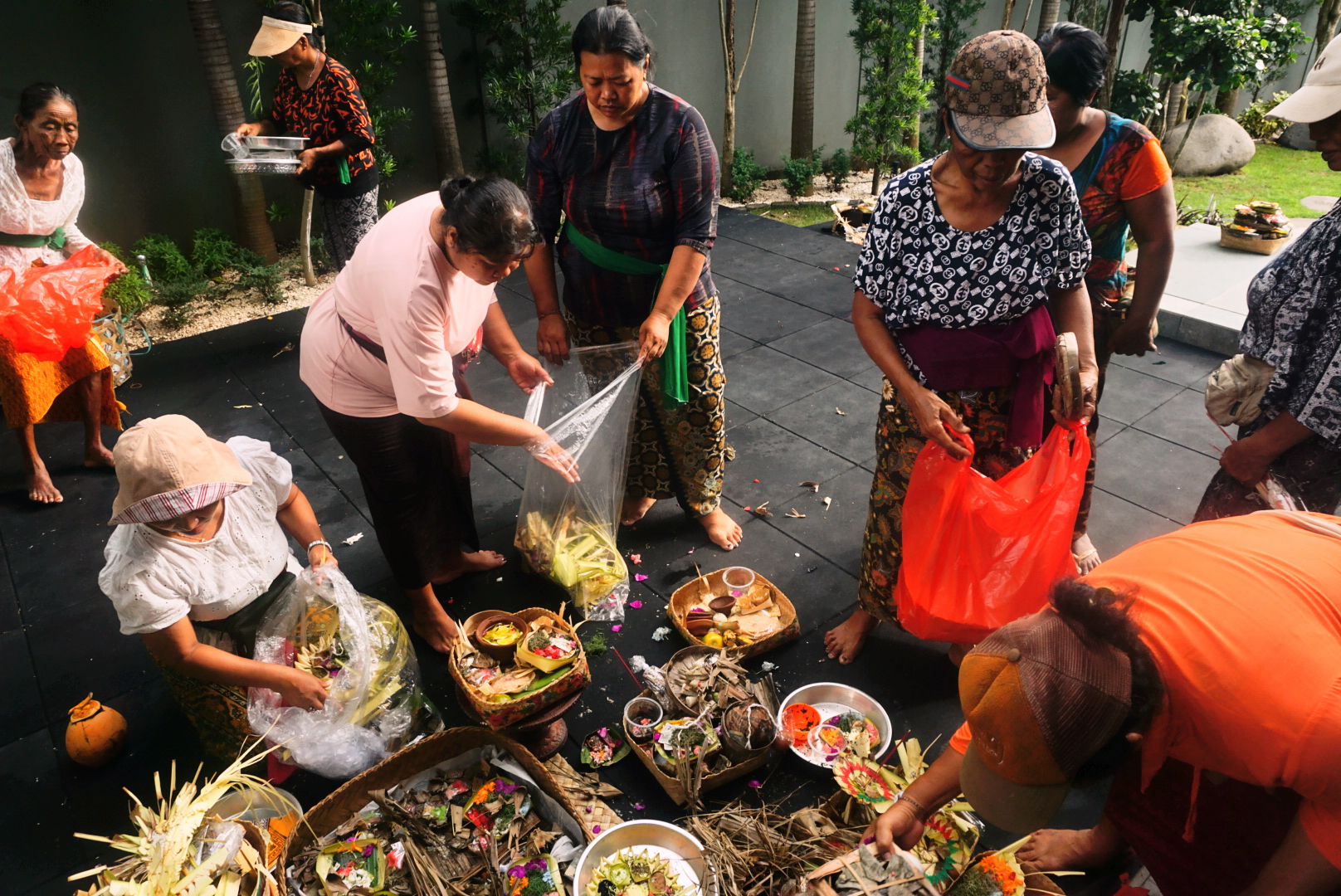
While the details vary by region or type of building, a typical Melaspas includes:
1. Preparing Offerings (Banten)
Beautifully arranged offerings are placed around the building. It includes canang sari, tumpeng (cone-shaped rice), fresh fruits, flowers, and also special offerings for each room or corner. They symbolize gratitude and purification.
2. Sprinkling Holy Water (Tirtha)
The priest sprinkles holy water to cleanse the space. Participants also receive holy water to drink and place on their head, symbolizing inner purification.
3. Pejati and Daksina Offerings
These are placed as the main offerings to the gods, representing sincerity and devotion.
4. Blessing the Structure
The priest touches or blesses important parts of the building (entrances, rooms, altars) with holy water, smoke, and mantras.
5. Nunas Tirtha (Receiving Blessing)
Everyone attending receives holy water, symbolizing their participation in the purification.
6. Marking the New Beginning
After the ceremony, the building is considered spiritually ready. People may begin using it, moving in, or opening it for business.
When I joined the Melaspas ceremony in one of villa project done by iLot Property Bali, I was mostly amazed at how peaceful and intentional everything felt.
Even from the outside, you could sense the meaning behind every step. The chanting, the incense drifting through the air, and the beautifully arranged offerings created a calm, sacred atmosphere that made us pause and appreciate the moment.
Everything was done with such care. It was amazing to see how thoughtfully each offering was placed, how everyone seemed to know their role, and how natural the whole process felt to them.
It made me realize how deeply connected Balinese people are to their traditions, and how these rituals aren’t just “events,” but a meaningful part of everyday life.

Conclusion
The Island of the Gods is filled with rich traditions, sacred rituals, and deep respect for ancestors—and Melaspas is one of them.
However, I believe Melaspas is more than just a ceremony. It reflects the deep spiritual values that shape everyday life in Bali. Experiencing it firsthand showed me how every building here is treated with respect and gratitude before it is used for any purpose.
In the end, Melaspas reminds us that a home in Bali is not simply built; it is blessed, welcomed, and brought to life with meaning.
FAQ
It’s called “Sembah“, a traditional Indonesian gesture of respect. It’s done by pressing the palms together in front of the chest, then raising them slightly while bowing. The hands may be lifted up to the chin or nose, depending on who you’re greeting.
Two major ceremonies stand out: Galungan and Kuningan, a 10-day celebration of good triumphing over evil, and Melasti, a large purification ritual held before Nyepi.
It’s called Melukat, a Hindu purification ceremony where people bathe in sacred water to cleanse the mind, body, and spirit. It’s usually done at holy springs or temples using tirtha (holy water) believed to have powerful purifying energy.