
Key Takeaways
- Balinese architecture is built around harmony, natural airflow, and spiritual balance through traditional spatial design.
- Traditional Balinese homes use separate pavilions inside one enclosed compound instead of a single large structure.
- Core philosophies like Tri Hita Karana, Tri Angga, and Asta Kosala Kosali still influence modern Bali villa design today.
- Modern Balinese interiors combine natural materials, open spaces, and tropical elements to create a calm living atmosphere.
- Many luxury villas in Bali preserve traditional architectural principles to create more authentic and timeless island living experiences.
Bali is not only known for its tropical landscapes and luxury villas, but also for its deeply rooted architectural identity.
Balinese architecture has a unique way of creating spaces that feel peaceful, open, and naturally connected to the environment. Every layout, direction, and structure follows traditional philosophies that have been passed down for generations.
Even many modern luxury villas today still preserve these principles to create a more authentic island living experience.
Let’s see the core principles of Balinese architecture and how traditional design elements are adapted into modern Bali villas today.

The Core Principles of Balinese Architecture
At its roots, Balinese pattern architecture is a traditional vernacular design framework. It relies heavily on geometry, spatial grids, and natural materials to maximize airflow and spiritual harmony.
Unlike Western construction, where an entire home is contained under one massive roof, traditional Bali architecture breaks a property down into separate pavilions (called Bale) arranged inside an enclosing wall.
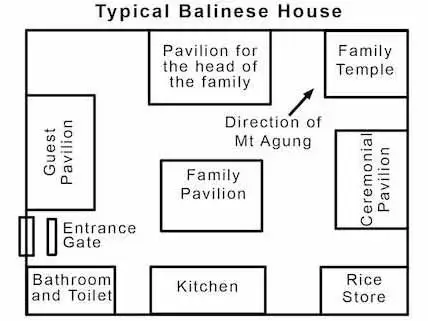
- Family Temple (Sanggah): The most sacred area is placed closest to the mountain direction (Kaja), usually in the northeast corner of the compound.
- Main Sleeping Pavilion (Umah Meten): Located near the temple on the uphill side, this pavilion is used by the head of the household.
- Ceremonial Pavilion: Built on the eastern (Kangin) side and used for weddings, rituals, and family ceremonies.
- Guest Pavilion: Positioned on the western (Kauh) side to welcome and receive visitors.
- Kitchen (Paon): Usually located on the downhill (Kelod) side of the compound.
- Toilet and Septic Area: Placed in the furthest corner away from the temple, as these areas are considered less pure.
- Entrance Gate: Commonly built on the lower western side of the property and carefully positioned based on Balinese spiritual beliefs.
One important thing to note, Balinese architecture relies heavily on mountain-sea orientation and cardinal directions instead of left or right.
Instead of saying “turn left” or “turn right,” Balinese people often give directions using cardinal points like north, west, or south. This strong awareness of direction is deeply connected to the traditional Balinese spatial philosophy called Tri Angga—which we’ll explain later in this article.
When modern luxury architects design high-end villas today, they preserve these spatial patterns to give buyers an authentic, stress-relieving island layout.
Read More: What Does a Modern Balinese Villa Look Like? Design Ideas & Inspiration (2026)
Key Elements of Balinese Architecture
To build a Bali villa that functions beautifully, you must understand these core structural rules:
1. Tri Hita Karana (The Three Harmonies)
This core philosophy requires every building to foster three distinct relationships: harmony between humans and the spiritual realm, harmony between humans and nature, and harmony among humans themselves.
This is why modern Balinese villas prioritize open-air lounges, indoor-outdoor bathrooms, and integrated green courtyards.
2. Tri Angga (The Three Body Zones)
According to the Tri Loka concept, a building is a living reflection of the human body:
- The Head (Utama): The roof structure, historically made of alang-alang (thatch) or wooden shingles.
- The Body (Madya): The main walls, windows, and living spaces.
- The Legs (Nista): The heavy stone foundations that anchor the building firmly to the earth.
3. Sanga Mandala (The Spatial Grid)
Your plots are divided into a 3×3 grid based on directions. The most sacred corner faces Mount Agung (Kaja), which is reserved for shrines or Master Suites. The least sacred zone faces the sea (Kelod), where kitchens, laundries, and carports are situated.
4. Asta Kosala Kosali (The Golden Ratios)
Think of this as the Balinese equivalent of Feng Shui. It is an ancient collection of architectural guidelines regulating proportions, clearances, and structural dimensions. Traditionally, layouts were custom-scaled to the physical measurements of the head of the household.
5. Seamless Cross-Ventilation
True Balinese architecture features high-pitched roofs, wide eaves, and structural air gaps. These architectural characteristics pull cool breezes across the central courtyard (Natah) and flush out tropical heat naturally, dramatically lowering your monthly air conditioning costs.
Read More: Modern Tropical House Villa Design Inspiration: Top Picks
Bringing the Look Indoors: Balinese Style Interior Design
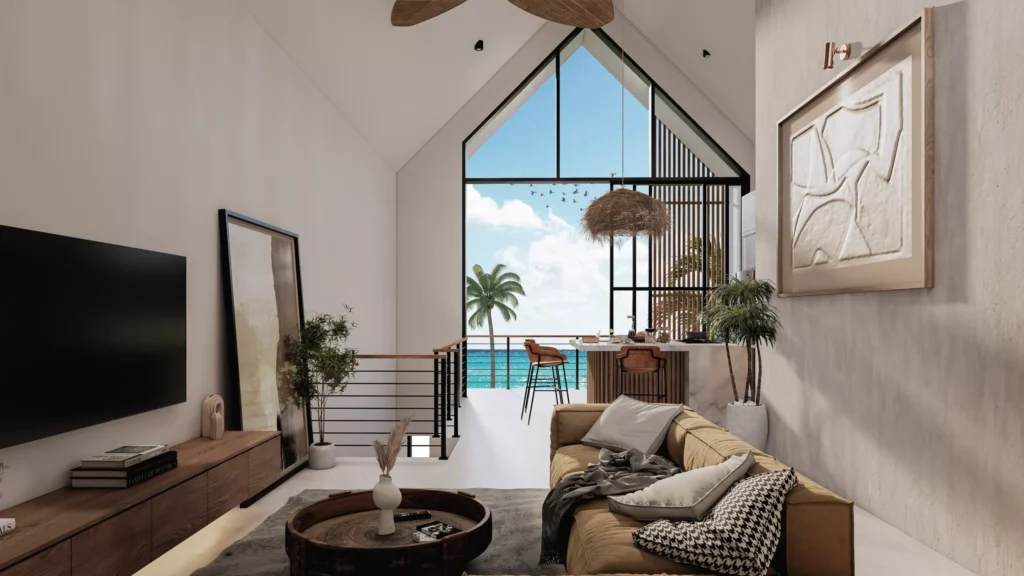
Building a villa with the right exterior design is only part of the process. The interiors also need to carry the same calm and grounded atmosphere to create a complete Balinese living experience.
Modern Balinese interior design usually avoids overly crowded or touristy decorations. Instead, it focuses on natural textures, warm materials, and open spaces. Large sliding glass doors are often used to blend the indoor and outdoor areas, turning tropical gardens into part of the villa itself.
Here’s how traditional Balinese architecture has been “adapted” into a more modern style for today’s luxury villas:
| Design Element | Traditional Application | Modern Premium Villa Variant |
| Material Base | Thatch, local brick, bamboo | Reclaimed teak, volcanic rock, terrazzo |
| Color Palette | Raw earth tones, jungle greens | Muted beiges, linen whites, warm charcoal |
| Lighting | Open oil lamps, natural sunlight | Sculptural woven rattan pendant lights |
| Accent Textures | Intricate wooden mythological carvings | Minimalist geometric Balinese textiles, custom stone reliefs |
Conclusion
Designing a villa in Bali takes more than just good taste. The best villas are built with a deep understanding of Bali’s climate, culture, and architectural style.
And getting that balance right requires someone who truly understands the island. A professional local architecture team can help turn your vision into a villa that feels authentic, timeless, and truly connected to Bali. It can also help your property stand out in Bali’s competitive market.
At iLot Architecture, we specialize in designing villas that blend modern luxury with authentic Balinese character. Explore our portfolio or book a free consultation with our senior architect today.
Let’s turn your Bali vision into something real!
FAQ
Balinese style blends nature, tradition, and natural textures through warm materials and timeless design elements
Traditional Balinese homes are designed as separate pavilions inside one enclosed compound, following the architectural principles of Asta Kosala Kosali.