
Key Takeaways
- Bamboo is lightweight, flexible, highly durable, and fast-growing, making it a strong and sustainable alternative for tropical villa construction.
- Building a bamboo villa requires proper bamboo treatment, elevated foundations, strong structural engineering, specialized joinery, and regular maintenance to ensure long-term durability.
- The cost of building a bamboo villa in Bali typically starts from around IDR 5 million per sqm, while luxury custom projects can cost significantly more depending on the design complexity and materials used.
Bamboo villas have become one of the most iconic tropical villa designs in Bali. Many luxury eco-resorts embrace this concept, especially in lush jungle areas like Ubud.
While these villas may look naturally stunning, building one in Bali involves much more than creative design alone.
If you’re interested in building your own eco-friendly bamboo building, this guide is for you.
We’ll break down the key steps to building a bamboo villa in Bali, including cost estimations and important things you need to prepare before starting the project.

Key Features of Bamboo Construction
Bamboo is lightweight yet highly durable, naturally flexible, and fast-growing, making it a popular material for Bali eco-friendly villa.
Some of the key aspects of using bamboo as a houses material are:
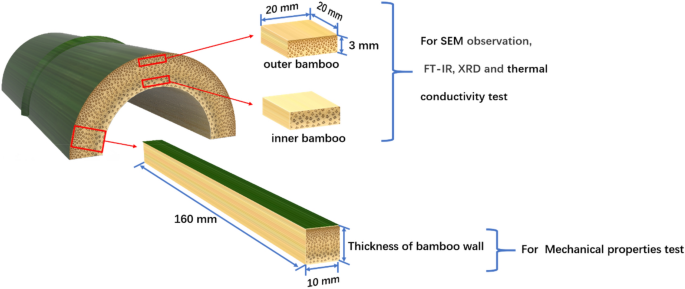
- Hollow Culms: Bamboo stems, called culms, are hollow between the solid ringed nodes. This structure makes them lightweight yet surprisingly strong and flexible.
- High Strength: Thanks to its long cellulose fibers, lignin, and silica, bamboo has tensile strength comparable to steel, making it one of the toughest natural materials.
- Design flexibility & Lightweight: Its natural flexibility means bamboo bends without breaking, while being easy to carry and shape—perfect for high roofs, curved walls, and open-air villa layouts.
- Varied Sizes: Bamboo comes in many species, from small garden varieties to towering giants over 40 meters tall.
- Renewable Resource: Bamboo is one of the fastest-growing plants on earth. With proper care, it can be harvested sustainably within 3-5 years and regrow without replanting. It makes bamboo a truly eco-friendly alternative to timber.
- Durability: Though a bamboo pole naturally lasts around 10 years, when treated properly, it can endure for centuries in a structure.
How to Build a Villa with Bamboo
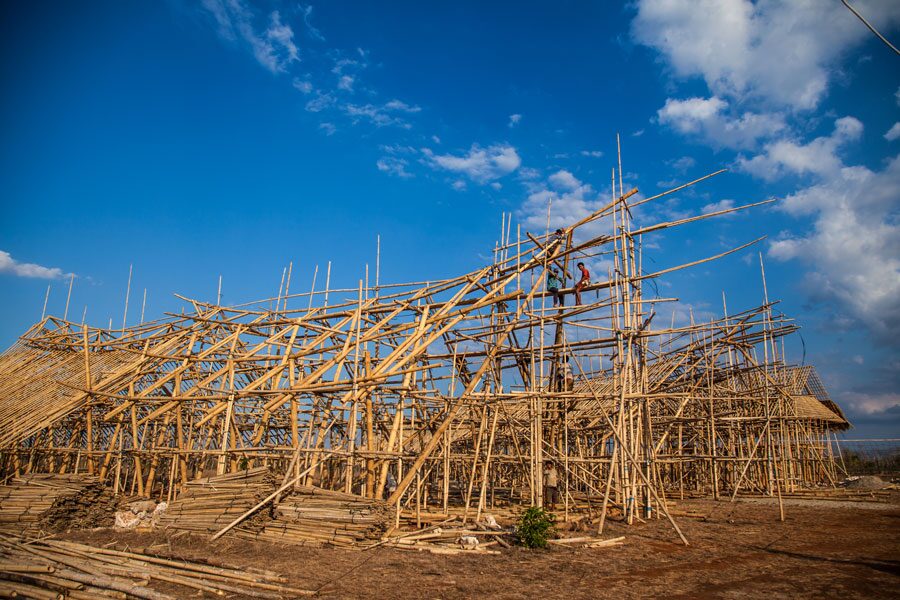
Here are the key steps in bamboo villa construction:
1. Choose Properly Aged and Treated Bamboo
Use mature bamboo that is typically around 3–5 years old, as it offers better strength and durability for construction.
Proper treatment—commonly using borax-based preservation methods—is essential to help protect the bamboo from insects, mold, and rot in tropical climates.
In addition, not every bamboo species works the same way. Some are better for structure, others for decoration. It’s better to talk to local builder experts about the best species for your area.
2. Build on an Elevated Foundation
Bamboo structures should never sit directly on the ground. Most bamboo villas are built on raised concrete or stone foundations to minimize moisture exposure and improve long-term durability.
Elevating the structure also helps improve airflow underneath the villa.
3. Focus on Strong Structural Engineering
For the main framework, builders usually use structural-grade bamboo for columns, beams, and roof trusses.
Bamboo villas often incorporate A-frame structures, curved roof systems, or traditional joinery techniques to improve stability and support against strong winds and earthquakes.
4. Use Specialized Bamboo Joinery
Unlike conventional wood construction, bamboo cannot simply be nailed together.
Builders typically use custom joinery systems such as fish-mouth joints, threaded rods, bolts, dowels, and rope binding techniques to securely connect bamboo poles while maintaining flexibility and strength.
5. Design a Protective Roofing System
A large overhanging roof is one of the most important elements in bamboo villa construction. Wide roof coverage helps shield the bamboo from excessive rain, humidity, and direct sunlight, which can weaken the material over time.
Many villas use natural roofing materials such as alang-alang thatch, palm roofing, or bamboo shingles to complement the tropical aesthetic.
6. Plan for Ongoing Maintenance
Like any natural building material, bamboo requires routine care. Regular maintenance often includes:
- Treat Bamboo Annually: Apply oil or a bamboo-safe preservative once or twice a year to slow weathering, keep stains away, and prevent pests.
- Inspect Joints and Poles: Check joints every few years to make sure they’re still tight and secure. Look for cracks or signs of wear on exposed poles.
- Maintain the Roof: A strong roof is the best protection. Keep roofing materials in good shape so bamboo columns are shielded from heavy rain and direct sun.
- Prevent Water Damage: Make sure bamboo doesn’t sit in water. A solid roof and raised foundation will help keep it dry and durable.
- Limit Sun Exposure: Too much direct sunlight weakens bamboo. Use roof overhangs or thoughtful placement to protect the structure.
- Watch for Pests: Insects and rot can harm bamboo, especially in damp conditions. Regular preservative treatments help stop infestations.
- Secure the Structure: Over time, joints may loosen. Tightening them regularly keeps the building safe and stable.
Proper maintenance significantly extends the lifespan of a bamboo villa.
Pro Tip
When planning a bamboo villa project, it’s also important to factor in:
- Land preparation and accessibility
- Specialized bamboo treatment and preservation
- Structural engineering for long-term durability
- Regular maintenance due to Bali’s tropical climate
- Permit and zoning requirements
To make the process easier while ensuring high-quality results, it’s important to work with an experienced architecture and construction team in Bali, such as Ilot Property Bali.
With more than 20 years of experience, Ilot Property Bali specializes in building luxury sustainable villas tailored to each client’s vision.
From turning your ideas into architectural concepts and cost estimations to handling full construction and furnishing, our team is ready to support every stage of your project.
Start by exploring our architecture portfolio, or schedule a free consultation to start planning your dream Bali villa today.
Cost of Building Bali Villa with Bamboo Materials
As a general estimate, building a bamboo villa or house in Bali typically starts from around IDR 5 million per sqm (approximately $330 USD per sqm) for simpler residential projects.
However, luxury bamboo villas with custom architecture, handcrafted detailing, premium finishes, and larger structural spans can cost significantly more depending on the design complexity and site conditions.
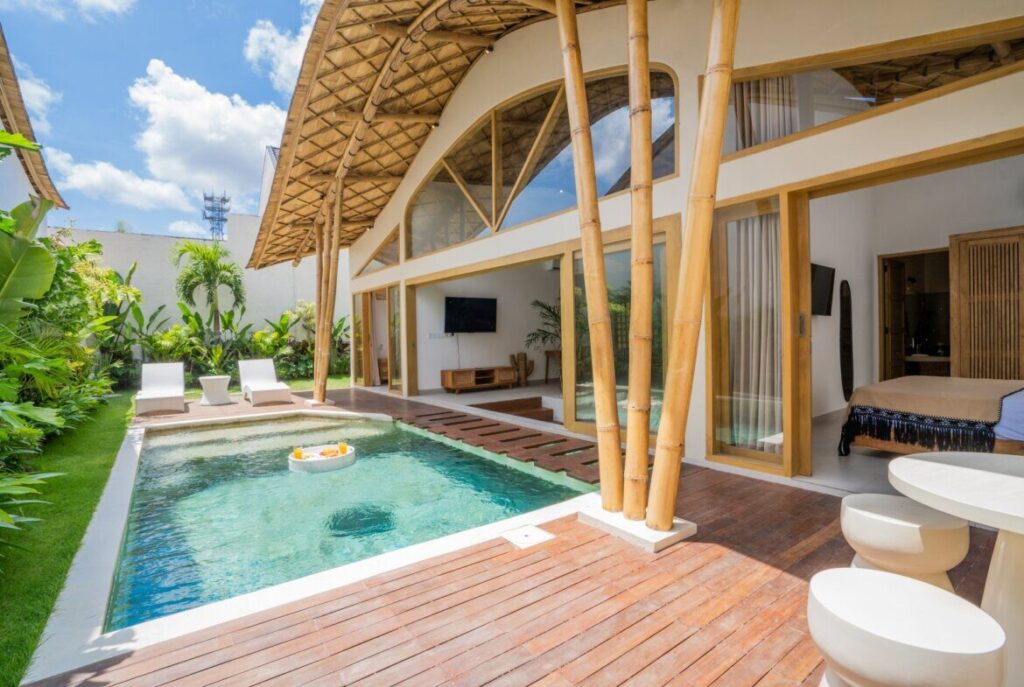
Many modern bamboo villas in Bali are designed with high-end tropical living in mind, often featuring:
- Private swimming pools
- Expansive open-air terraces
- Indoor-outdoor bathrooms
- Elevated jungle or rice field views
- Large curved roof structures
- Custom artisan furniture and lighting
Read More: How Much Does It Cost to Build a Villa in Bali?
Example of Modern Bali Villa Design with Bamboo
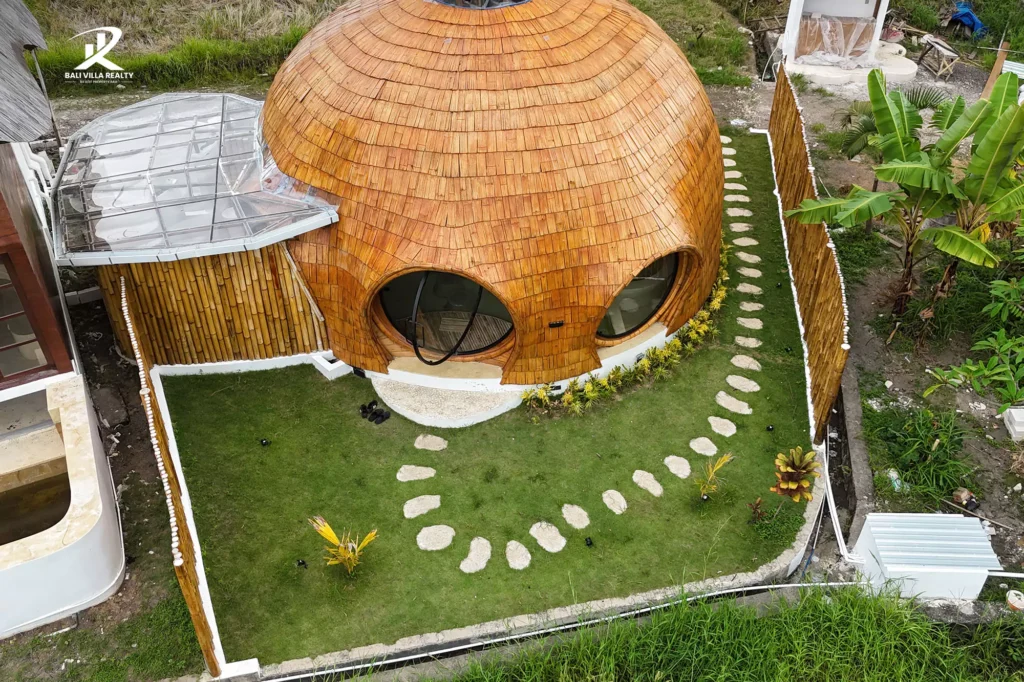
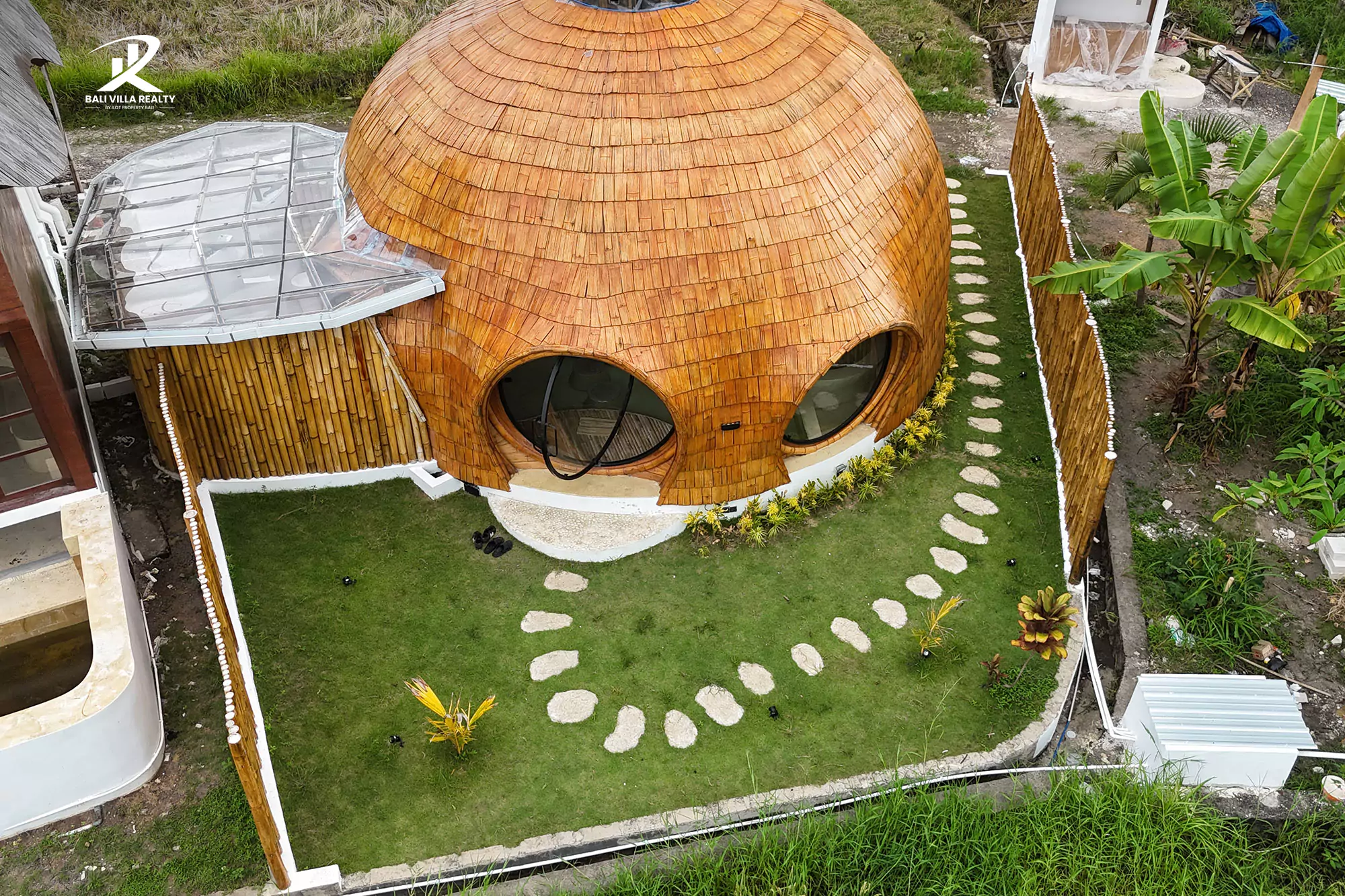
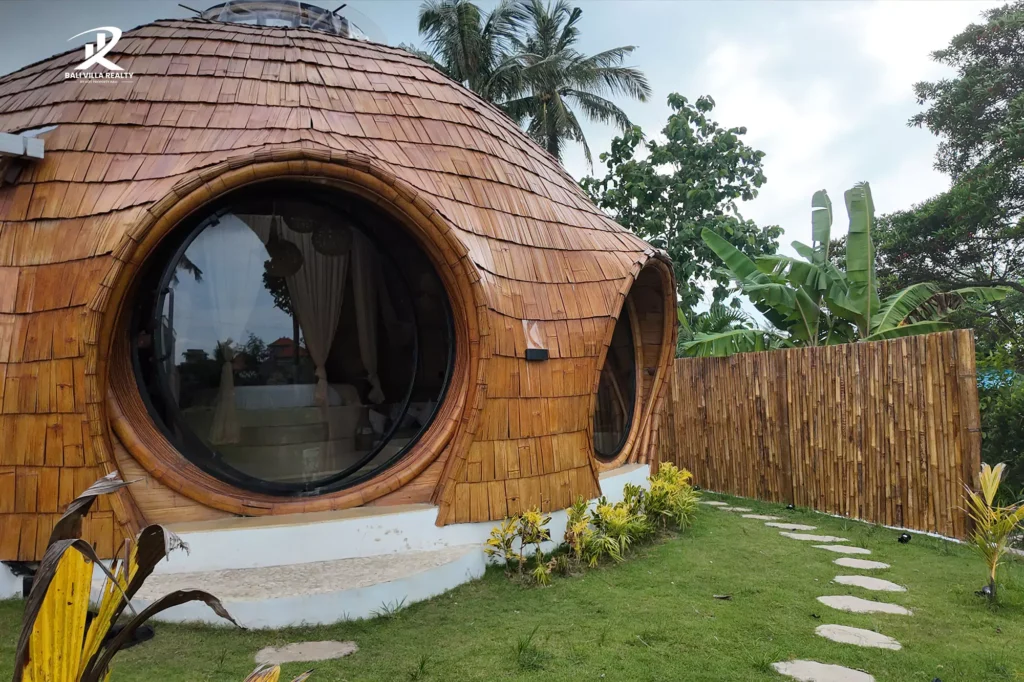
One beautiful example of a bamboo villa design is this serene 1-bedroom retreat located in Cemagi—part of the exclusive collection by Bali Villa Realty under Ilot Property Bali Group
Designed for those seeking a more mindful and eco-conscious lifestyle, this villa offers a rare sense of calmness that feels worlds away from conventional tropical homes.
Every part of the structure is crafted using bamboo and natural materials, creating a living space that feels warm, organic, and deeply connected to nature.
Inside, the villa welcomes you with soft curved architecture instead of traditional rigid layouts.
The flowing circular design creates a soothing atmosphere that feels both intimate and peaceful, allowing every corner of the home to blend naturally together.
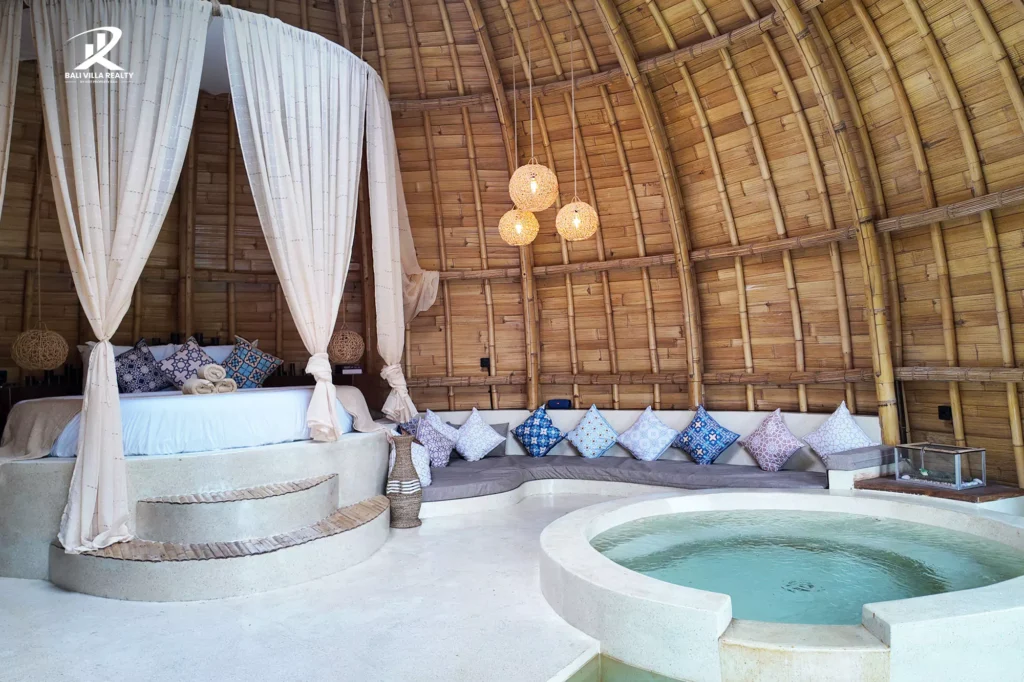
Fully furnished with a refined minimalist approach, the villa sits on 70 sqm of land with a thoughtfully designed 60 sqm interior featuring one bedroom and one bathroom.
One of its standout features is the cozy sunken lounge — an inviting space perfect for slow mornings, reading, meditation, or simply enjoying the quiet rhythm of Bali living.
At the center of the villa, an indoor plunge pool beneath soaring bamboo ceilings creates a truly unique experience.
Surrounded by natural textures and filtered light, it feels less like a house and more like a private wellness sanctuary immersed in nature.
Conclusion
Bamboo construction is more than just a building method — it’s an art form deeply connected to nature, craftsmanship, and tropical living.
Known for its remarkable strength, flexibility, and sustainability, bamboo creates homes that feel both luxurious and naturally harmonious with their surroundings.
If you’re considering building your own bamboo villa in Bali, or simply exploring ideas for a future project, Ilot Property Bali is here to guide you through every step.
Share your vision with our team for free, and let’s bring your dream tropical villa to life.
FAQ
Guadua, Dendrocalamus and Bambusa are considered the best type of bamboo for building.
– Lack of standardization and strict certifications compared to concrete or steel
– Durability depends on species, treatment, and processing methods
– Limited knowledge among builders and architects
– Technical challenges in connecting hollow bamboo poles
– Inconsistent supply and quality
– Competition with traditional materials that dominate the market