

Key Takeaways
- Start with passive design. Shape, orientation, openings, and shade are usually the most effective first steps to reduce cooling needs, and you should decide them carefully at the planning stage.
- Design for your specific site. Hillside, rice-field and coastal plots each behave differently, so orientation, shading and materials should be based on a site survey.
- Plan the layout and the technology in the right order. Separate bedrooms from social areas, connect living spaces to the outdoors for cross-ventilation, and add solar or efficient AC only after the design has reduced energy demand.
Bali’s weather is hot, humid, and rainy for much of the year, so how you design a villa affects both comfort and electricity use. Many owners rely on air conditioning, which works but can be expensive.
To ensure your property fits the tropical climate, design it with passive strategies. This guide shows how passive design works, from orientation to materials, and how it can cut energy use without losing style.
What Is Passive Design and Why Does It Matter in Bali?
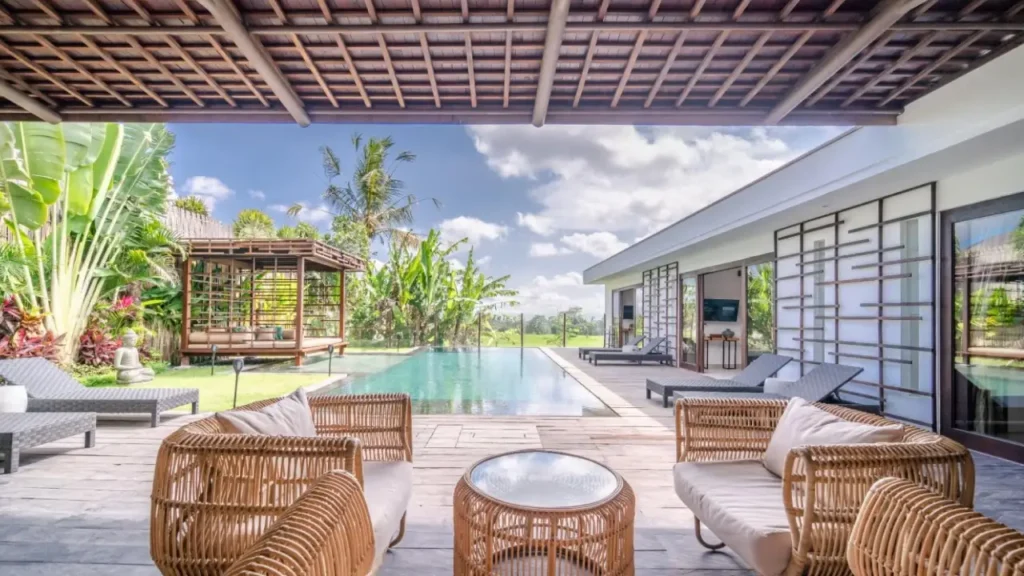
Passive design means using a building’s shape, layout, and features to manage heat, airflow, and daylight instead of relying on machines.
In Bali’s warm, humid climate, this is usually the most cost-effective way to reduce cooling needs, since key choices like orientation, room layout, window placement, and roof design are made during planning.
Passive design can lower the need for air conditioning, but it may not remove it completely. Many luxury villas still use AC in bedrooms or enclosed rooms for extra comfort.
Read More: Bali Villa Design Trends 2027 Guests Will Pay Extra For
How Should You Orient a Villa in Bali?
Position the villa so its main openings face the usual breezes, and its long walls avoid the direct afternoon sun. This setup helps the walls absorb less heat and lets air flow through the house, so you need less air conditioning than in a poorly placed building.
Since the sun’s path and wind direction change from site to site, use a site survey to decide on orientation. Hillside, rice-field, and coastal plots each have their own challenges.
Bali Villa Design on a Hillside
A client buys a sloping plot that faces west because of its beautiful sunset view. If the design simply places large glass panels on the west side, the living room will receive direct afternoon sun and the AC will have to work hard.
On a slope, the hillside’s orientation affects how long the building gets sunlight. Airflow follows the land: during the day, air rises up the slope, and at night, it flows down into the valley. Higher spots are usually a bit cooler, but heavy rain can cause runoff and erosion.
A better solution:
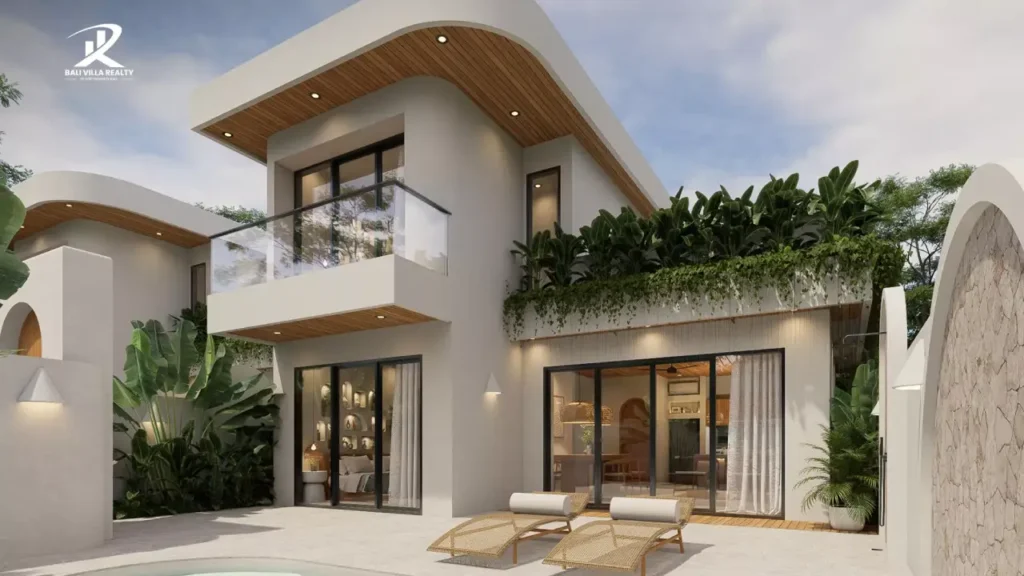
- Add deep overhangs, vertical fins, or wooden screens on the west side. This way, you keep the view but block out the heat.
- Place bedrooms on the shadier, breezier side.
- Build the villa in steps along the slope, so air can move between the different parts instead of being blocked by one big structure.
- Plan drainage and retaining walls early, as these are the main risks on a slope during heavy rain.
Read More: Smart Tips for Building a Villa During Bali’s Rainy Season
Bali Villa Design in Rice Fields
A villa faces an open rice field with wide sliding doors on the view side. Cross-ventilation is good, but the owner has two complaints: the rooms get hot in the afternoon because there is no shade, and mosquitoes come in when the doors are open.
Open land lets wind move easily, but there are few large trees for shade. Humidity is often higher because of the water and plants, and the conditions change with the planting season, depending on whether the fields are flooded or harvested.
The solution:
- Add a deep veranda or overhang, plus shade trees.
- Use insect screens on ventilation openings so the doors can stay open.
- Add more ways for air to move, like high ceilings or openings at the tops of walls, to help with humidity.

Bali Villa Design in Coastal Areas
A beachside villa uses ordinary metal frames and hinges. Within a few years, rust appears on the doors, railings, and outdoor AC units, and the timber needs more frequent maintenance because of exposure to salt and sun.
Sea breezes are often stronger and more steady, which helps with ventilation. But these spots are also more exposed: sunlight and its reflection are stronger, wind pressure is higher, and salty air causes things to rust faster.
The solution:
- Choose corrosion-resistant materials, such as marine-grade stainless steel, properly treated timber, and finishes suited to coastal conditions.
- Face openings toward the sea breeze, but add shade so they don’t get direct sunlight.
- Think about adding windbreaks and ways to protect openings during extreme weather.
- Use salt-tolerant plants in your landscaping to give shade and protect against wind.
Read More: 9 Best Sustainable Building Materials for a Tropical Climate Villa
How Do You Design for Natural Ventilation?

Natural ventilation lets air move freely through the villa. Features like high ceilings, open-plan living areas, big sliding or folding doors, and windows on opposite sides create cross-breezes. These help keep rooms cooler and less humid, so you need air conditioning less often.
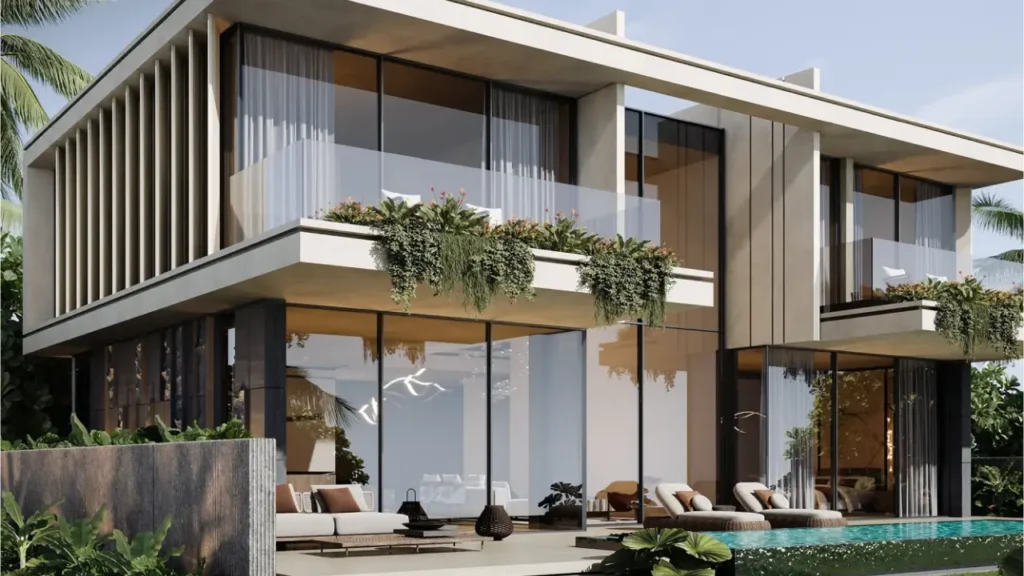
Shade is the simplest way to reduce heat, since most unwanted heat in tropical homes comes from direct sunlight. Shade also protects interiors during heavy rain, as deep overhangs let you keep openings ventilated and dry.
Architects often use deep roof overhangs, vertical fins, pergolas, wooden screens, verandas, and trees or landscaping. These features keep the villa bright but block the sun’s heat before it hits the walls and windows.
A defining element of Balinese villa design is the seamless transition between indoor and outdoor spaces:
- Sliding glass walls and folding doors dissolve barriers between the home and garden.
- Courtyards and pavilions bring natural light and greenery into the core of the villa.
- Verandas and terraces extend living areas into shaded outdoor retreats.
This approach not only enhances the tropical experience but also maximizes natural ventilation and daylight.
What Is the Best Floor Plan for Tropical Living?
A good Bali floor plan balances the climate with your lifestyle. Usually, bedrooms are set apart from social areas for privacy; living and dining spaces connect directly to gardens, pools, or courtyards, and rooms are placed to catch breezes but avoid too much sun.
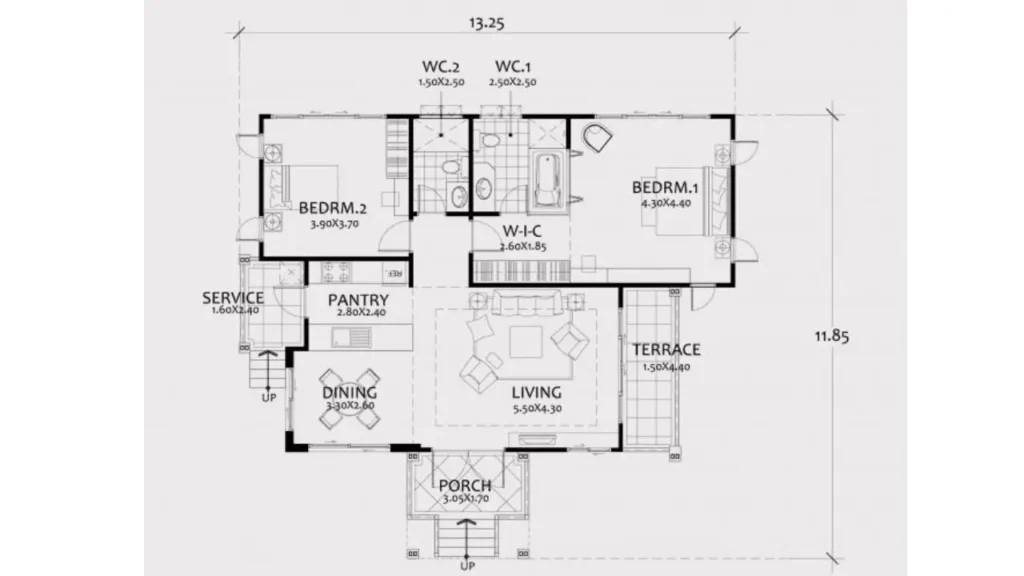
This layout has two clear zones. The bedrooms (Bedroom 1 and 2) are at the back, and the social areas (living, dining, pantry) are at the front. Bathrooms, a walk-in closet, and a corridor separate the two zones, keeping the bedrooms quiet and private.
Since the living room, dining area, and both bedrooms have openings on different sides (like the porch, terrace, and side doors), air can flow across the house.
This indoor-outdoor living style is central to Balinese house design. It helps with natural ventilation and daylight, giving owners the tropical feel they want.
Read More: What Makes Balinese Architecture So Unique? Design Pattern Explained
So, What Should You Do First?
If you want your Bali villa to really suit the tropical climate, begin with the site. It’s easier to work with architects who live and work in Bali, since they know the local landscape. iLot Architecture can help with this.
If you’re not sure about orientation, roof design, or window placement, iLot Architecture can review your villa layout. These choices are the hardest to change later, so feel free to ask us any questions as soon as possible.

Once your building design is set and energy needs are still high, that’s the right time to plan for solar or efficient AC.
FAQ
Add technology after you’ve already lowered energy demand through design. Solar panels, smart lighting, rainwater harvesting, and energy-efficient AC are extra investments that can increase your budget, and they work best in a villa that’s already efficient.
Landscaping is both a design feature and a climate-management tool. Lush gardens with native plants give natural shade and privacy, while water features like koi ponds, fountains, or reflecting pools can cool the area around the villa. Infinity pools also make the villa feel like it blends into the landscape.
Daylighting lets natural light reach deep into the villa without letting in too much heat. You do this by placing windows, skylights, and courtyards in the right spots, and by connecting indoor and outdoor spaces with an open-plan layout. This keeps your rooms bright all day without overheating.
Conclusion
An energy-efficient Bali villa starts with early design choices: orientation, ventilation, shade, daylight, and the right materials. Add solar and smart systems later to boost performance. This way, your villa stays stylish, comfortable, and more affordable to run.
If you’re planning a villa, the iLot Property Bali architecture team offers a free consultation to review your plot and design options just for you. Let’s chat—no commitment needed.