
Disclaimer: This article is for informational purposes only. Indonesian laws and regulations may change, so we strongly recommend cross-checking the information or consulting a qualified professional for the latest updates.
Key Takeaways
- Australian citizens currently need a valid visa to visit Bali, with the Visa on Arrival being the simplest option for most 30-day holidays.
- Indonesia is reviewing visa-free entry for Australia and several other countries, but no official launch date has been announced.
- Travellers planning to stay longer can consider the C1, D1, D2, or D12 visa, depending on their travel purpose and required length of stay.
- Australian visitors must also complete the All Indonesia Arrival Card and pay Bali’s IDR 150,000 tourism levy.
- Visa extensions now require an in-person visit to an immigration office for biometric verification, even when the application begins online.
Do Australians need a visa to visit Bali? Yes, Australian citizens require a visa to enter Bali. Fortunately, it is generally easy to obtain, especially for short stays.
The Indonesian Government may also soon introduce visa-free travel for eight countries, including Australia. This could make obtaining permission for a holiday in Bali easier and more affordable.
Here is everything you need to know about the proposed visa-free policy and the current Bali holiday visa requirements for Australians, helping you enjoy a smoother visit.
What Is the New Visa-Free Travel Policy for Australians?
Visa-free travel would allow Australian passport holders to enter Indonesia for up to 30 days without paying for a Visa on Arrival. At present, Australians still need to pay around AUD 40, or IDR 500,000, for a 30-day visa.
In early June, Indonesia’s Tourism Minister, Widiyanti Wardhana, confirmed that Indonesia is currently reviewing whether to restore visa-free entry for Australia and several other countries, including Australia, New Zealand, Japan, South Korea, and India. However, no final decision or official launch date has been announced yet.
Bali Visa Requirements for Australian Travelers
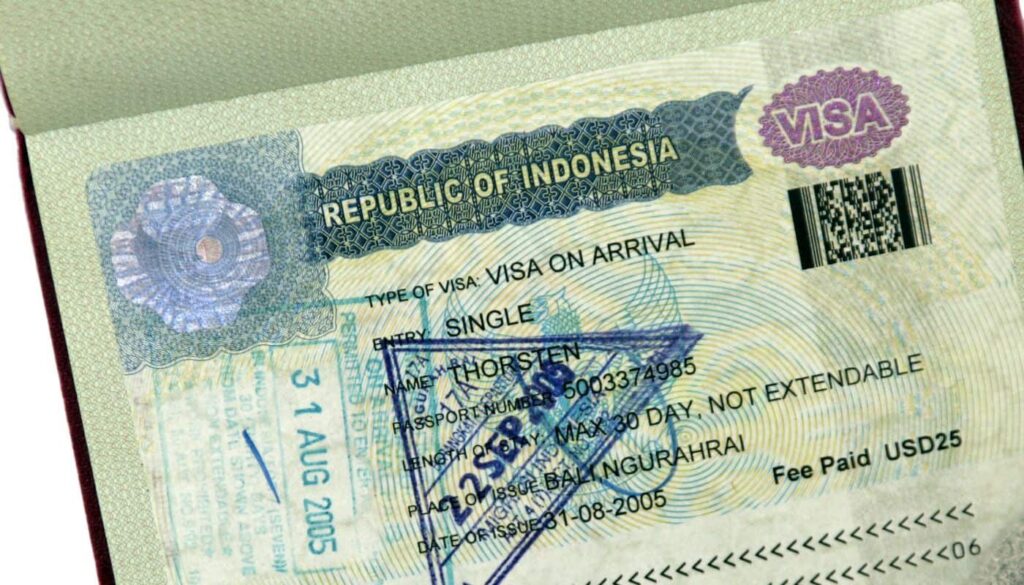
Your length of stay in Bali and purpose of travel will determine which type of Indonesian visa—such as a Tourist Visa or Visit Visa—applies to you. Here are the options available:
For a Short Stay (30 Days)
- Visa Type: Visit Visa / Visa on Arrival (VoA)
- Permitted Activities: Holidays, visiting friends or family, transit, product sourcing, and early-stage investment research
- Not Permitted: Taking up employment or receiving income in Indonesia
- Official Fee: IDR 500,000 per person when applying directly, approximately USD 35 or AUD 50
- Advantages: A simple and affordable option for short trips, with limited documentation required
- Limitations: The total stay cannot exceed 60 days. To remain longer, you must leave Indonesia and enter again with a suitable visa
For a Longer Stay (60 – 180 Days or 1-2 Year)
| Validity | Visa Type | Allowed Use | Not Allowed | Price |
| 60–180 days | Single Entry: C-Type (211A) Visit Visa (can then be extended twice, with each extension adding another 60 days) | – Tourism – Visiting family/friends – Attending meetings, incentives, conventions, and exhibitions as an attendee | – Speaking at events – Operating a business or earning money – Providing services, including working as a yoga teacher or life coach at seminars and retreats | IDR 1 million ($56 USD / 78 AUD) |
| 1 year | Multiple Entry: D1 & D2 Visit Visa (you can stay for up to 60 days per visit) | – Visiting Bali or Indonesia several times per year – Tourism – Visiting family/friends – D1: Attending conferences, seminars, industry gatherings, meetings, incentive trips, and exhibitions – D2: Business meetings, checking and inspecting goods at an office, signing business contracts, and developing commercial opportunities | – Employment purposes, including carrying out an employment contract – Earning money in Indonesia or performing paid work for a salary – Selling goods or services directly to Indonesian consumers – Attending events as a paid speaker – Converting your visa to an ITAS (Indonesian Temporary Stay Permit) | IDR 4 million (1 year) ($224 USD / 312 AUD) |
| 1–2 years | Multiple Entry: D12 Pre-Investment Visa (you can stay for up to 180 days per visit) | Exploring business opportunities and preparing for investments in Indonesia, including: – Market research – Business preparation – Site visits and field surveys – Meeting with business partners | – Local employment – Remote work (including digital nomad work) – Selling goods or services – Permanent residency without a genuine business intent – Direct conversion to KITAS | IDR 7 million (2 years) ($393 USD / 547 AUD) |
Overall, long-term visas have the following pros and cons:
- Pros: They offer the longest available stays under the listed visit visa options, giving you plenty of time to explore Bali and the rest of Indonesia. Depending on your permitted activities, they may suit long-term travellers and people making repeated visits.
- Cons: They require more documentation and greater proof of funds upfront. The application process is also more involved than applying for a simple VoA.
Read More: Second Home Visa: A Must Have for Long-Term Stay in Bali
Additional Bali Entry Information Australians Should Know
1. The Bali Tourism Levy
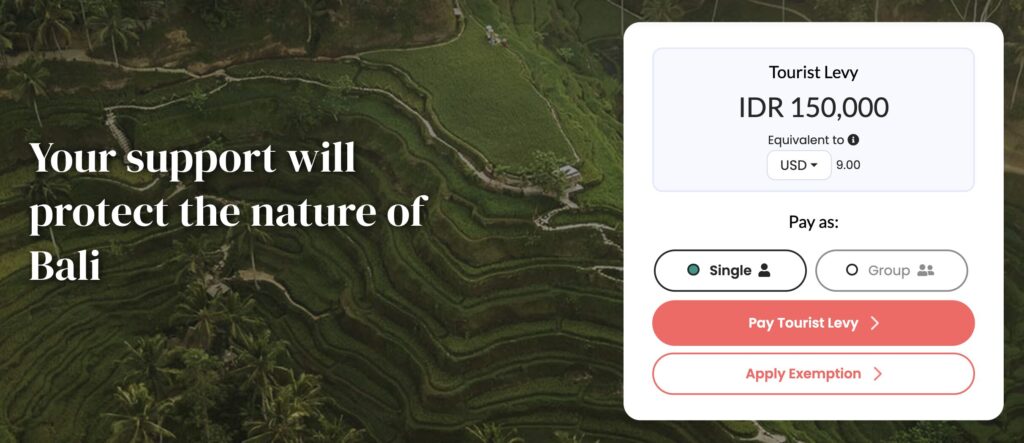
As of February 2024, every international tourist arriving in Bali, including Australians, must pay a one-time tourism levy of IDR 150,000 (approx. $8.43 USD or $11.73 AUD).
This fee goes directly towards projects that protect Bali’s unique culture and pristine natural environment, so it’s supporting an important cause.
We strongly recommend paying the levy online before your trip via the official “Love Bali” website or app to avoid any delays upon arrival.
2. All Indonesia Arrival Card

Next, you should also complete the All Indonesia Arrival Card before your flight to Bali. This online declaration system combines your immigration, customs, health, and quarantine information in one form.
You can find the form at allindonesia.imigrasi.go.id and must complete it online within 72 hours before your flight lands in Indonesia.
Read More: Indonesia Bridging Visa for a Longer Stay in Bali: Full Tutorial to Apply
The Visa Extension Process: The New Biometric Rule
As a security measure, anyone extending a visa or stay permit has been required to visit a local immigration office in person for biometric verification since June 2025. This means immigration officers will take your fingerprints and a new photograph.
This process still applies even if you submit your extension application online. After completing the form and payment, you must visit an immigration office to complete the biometric stage.
Our advice is to start your extension process at least two weeks before your current visa expires to ensure everything is processed smoothly. You can handle it yourself or use a reputable visa agent to guide you through the process more smoothly.
Read More: Indonesia’s Golden Visa: Everything You Need to Know
Conclusion
Australians have several visa options depending on the length and purpose of their stay. For a standard holiday of up to 30 days, the Visa on Arrival (VoA/e-VoA) is generally the most convenient option.
However, if you want to stay longer or need to visit Bali several times—for example, while building a villa here—it may be better to apply for a D1 or D2 Visit Visa, or a D12 Pre-Investment Visa for business-related purposes.
A little planning goes a long way. Taking care of these essentials can help ensure a smooth arrival, allowing you to begin your Bali adventure from the moment you step off the plane.
FAQ
The e-Visa on Arrival (e-VOA) is very convenient. From our own experience using it, the e-gates were fast and easy, and we cleared the airport in about an hour after landing—even with the wait for luggage.
Yes, you can get a tourist visa for Bali online. You can apply for an electronic Visa on Arrival (e-VOA) or a standard Visitor Visa (B1) for tourism
the ideal time is to apply online at least 3 to 7 days before your departure to skip airport queues, and no less than 48 hours before your trip
you’ll need a passport valid for at least six months, proof of an onward or return flight, and evidence of sufficient funds. The visa is issued directly at the airport, making it a simple option for most travelers.
Bali e-visa processing times depend directly on the type of visa you are applying for, ranging from just a few minutes to several weeks