
Key Takeaways
- Heat in a tropical villa comes from the roof, walls, glazing, and air leaks together, so a stronger AC alone rarely solves the problem.
- Roof material matters, but how the whole roof is built (insulation, ventilation, colour, slope) often matters more than clay tile versus metal.
- Clay tile is often more comfortable than bare metal, yet insulated and ventilated metal roofs can perform well, and a poorly built tile roof can still run hot.
This November’s very hot Bali weather may be causing many villa owners on the island to face the same problem: their property gets hotter even after turning on the AC.
According to BMKG (Indonesian Agency for Meteorology, Climatology, and Geophysics), Bali’s dry, hot weather has been influenced by the sun’s apparent position in the southern hemisphere since 16 October 2026, after it crossed the equator last September.
The typical Bali villa layout, with an open-plan design, also lets heat in from several places at once, and the roof is often the biggest source. This guide shows what to check before buying a bigger air conditioner.
Why Does My Bali Villa Still Get So Hot Even With Air Conditioning?
A Bali villa can still get hot despite air conditioning because the building absorbs heat faster than the AC can cool it. Strong sun all year and high humidity heat the roof, and when the space under it has little insulation or airflow, that heat collects above the ceiling and spreads into the rooms below.
Common heat sources include a roof heated by the sun, walls facing west or east, large glass doors without shade, and gaps around doors, windows, and the roof edge that let hot, humid air in. When these heat gains are high, the AC runs constantly, struggles to keep the temperature down, and the villa still feels sticky.
How Much Does the Roof Contribute to Villa Indoor Heat?
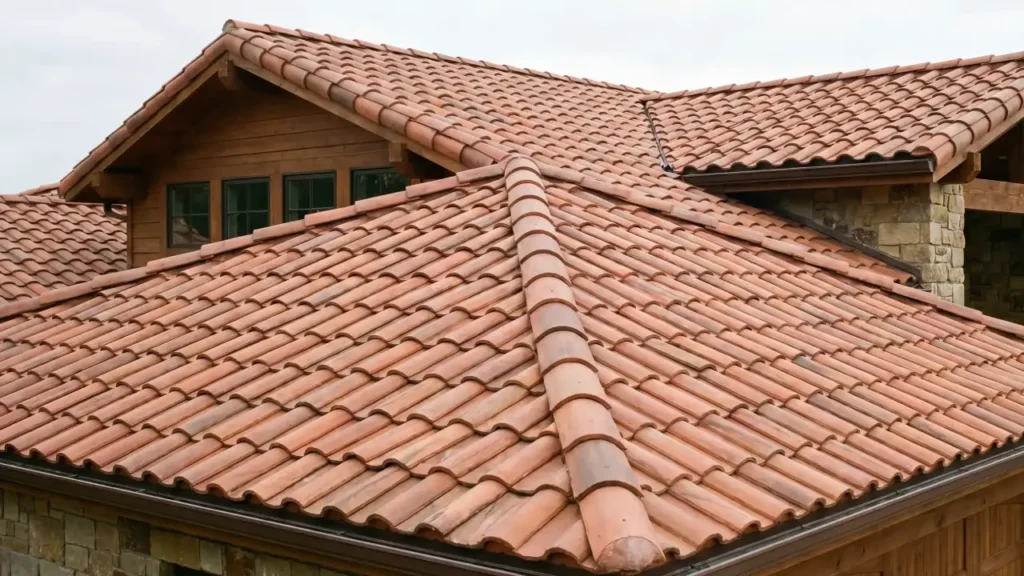
The roof is typically the most sun-exposed surface of a villa, so it is often one of the biggest contributors to indoor heat, particularly in single-storey villas where the ceiling sits directly beneath it. Without insulation and ventilation, the heat accumulates and radiates down into the rooms.
That is why many Bali property developers use cool roofs, like clay tile or metal roofs, to reduce heat. Research on “cool roofs”—roofs made to reflect sunlight and release heat quickly—shows their impact.
A review of cool-roof studies in tropical areas (Rawat and Singh, 2022) reported energy savings of up to about 35.7% and an average roof temperature drop of around 2.4°C.
Clay Tile vs Metal Roof: Which Keeps a Bali Villa Cooler?
Clay tile and metal roofs are two favourite roofing options for Bali properties. Clay tile is often more comfortable than uninsulated metal, especially because it’s quieter during the rainy season.
Here is the full comparison:
| Factor | Clay tile | Metal roof |
| Heat behaviour | Slower to heat up; releases heat gradually | Heats and cools quickly; conducts heat unless insulated |
| Weight | Heavier; structure must be designed for the load | Lighter; often faster to install |
| Rain noise | Generally quieter | Can be loud without insulation or underlayment |
| Typical style fit | Balinese, tropical, resort-style | Modern, minimalist, wide-span designs |
| Key risk | Poor flashing, displaced or broken tiles | Corrosion (especially near the coast), sealing, noise |
Clay tile has high thermal mass, so it absorbs heat slowly and releases it gradually. Metal, on the other hand, can heat and cool quickly, but it should be used with reflective insulation and a ventilated space instead of bare metal, because it heats up fast and lets heat pass through easily.
Reported figures help show the difference, with some notes. Unglazed red clay tile reflects about 33% of sunlight, while white or glazed types may reflect 70–80%, and average indoor temperatures are about 29.5°C under clay tile versus about 31.3°C under zinc sheet roofing.
Read More: What Makes Bali Villa Fit the Tropical Climate? Passive Design Strategy
What Matters More Than the Roofing Material?
The whole roof setup usually matters more than the material on top. A roof setup includes the covering, waterproof layer, insulation, ventilation paths, slope, and overhang:
- Ventilation: Air openings at the edges and top of the roof let hot air escape from the roof space instead of building up above the ceiling.
- Insulation: A reflective foil or other insulation layer under the roof slows heat from moving into the rooms below.
- Roof colour and finish: Lighter or shiny finishes absorb less sunlight than dark ones.
- Roof slope and overhang: A proper slope drains heavy rain, and deep overhangs shade walls and windows.
- Waterproofing and drainage: Good flashing, underlay, and gutters protect against leaks during the rainy season.
For example, two villas with identical clay tiles can feel very different if one has a ventilated roof space with foil insulation, and the other has a plasterboard ceiling fixed tightly under the rafters.
Reflective foil insulation sits under the roof frame, and open edges and a ridge vent let air move through the space. By mid-afternoon the tiles are hot, but much of that heat is reflected by the foil or carried away by the airflow before it reaches the ceiling.
Meanwhile, the other villa with a plasterboard ceiling fixed tightly under the rafters has tiles that absorb the same sun, but the heat has nowhere to go. It passes through the thin ceiling and spreads down into the room, making the room feel sticky and humid air is trapped above the ceiling. During the rainy season, that trapped moisture can also cause mould in the roof space
What to Check First If Your Villa Already Runs Hot?
- Feel the ceiling in the late afternoon. A ceiling that is clearly warmer than the walls suggests heat is coming from the roof.
- Look at the roof space if there is safe access. Check for visible vents, insulation, and signs of moisture or mould.
- Note which rooms are hottest and which direction they face. West-facing rooms with large glass often point to a shading problem.
- Check for air leaks around doors, windows, and ceiling penetrations, which let humid outside air in.
- Compare AC run time across the day. Constant running in the afternoon often points to solar gain.
If your AC cannot keep up with your villa’s heat and humidity, it might be best to ask a professional property developer to check the layout and building condition. iLot Property Bali can help.
Our team includes local Bali architects and property developers who handle villa layout design and renovation throughout Bali. We can assess your property and identify any needed improvements for free.
FAQ
Generally, yes. Darker surfaces absorb more solar radiation than light or reflective ones, so a dark roof without insulation and ventilation tends to transfer more heat indoors.
Often partly. Depending on the existing roof, options may include adding ventilation, installing reflective insulation, applying a reflective coating, or adding shading. Whether these are feasible depends on the structure and roof type, so it needs a site assessment.
Bali’s heat is harder to manage because of the combination of high temperatures, humidity, intense sunlight, and heavy seasonal rainfall. High humidity makes the air feel hotter and slows the body’s natural cooling process.
Bare metal sheets transmit rain impact as noise. Underlayment or insulation beneath the sheets typically reduces it.
Conclusion
A hot Bali villa is usually a design and construction problem rather than an AC problem, and the roof is one of the first places to look. Clay tile and metal can both work, but only when the roof is built as a system with insulation, ventilation, a suitable slope, and shading.
First, diagnose where the heat comes from, then decide what to change. If you need detailed help, contact iLot Property Bali today (free, no commitment).