
Key Takeaways
- Bali villa design in 2027 is becoming more intentional, with wellness, sustainability, and personalized experiences shaping how properties are designed.
- Wabi-Sabi-inspired tropical minimalism combines natural materials, local craftsmanship, and imperfect textures to create warm, distinctive spaces.
- Climate-responsive Tropical Modernism prioritizes natural airflow, shade, natural light, and indoor-outdoor living for Bali’s tropical environment.
- Flexible spaces are becoming more important as villas adapt to longer stays, remote work, families, and the growing digital nomad market.
Bali villa design in 2027 is entering a more mature phase, just like the real estate market itself. Sustainable design, wellness-focused spaces, and Wabi-Sabi are predicted to become trends that help properties stand out.
For years, the familiar villa formula worked: a private pool, open-plan living room, tropical landscaping, polished concrete, and large glass doors. Those features aren’t disappearing in 2027, but they’re no longer enough to make a villa feel distinctive in an increasingly crowded market where new properties keep competing for attention.
At the same time, guests, homeowners, and investors are becoming much more familiar with Bali’s villa market. That’s why thoughtful architecture is becoming increasingly important.
Here are the Bali villa design trends worth watching next year.
1. Wabi-Sabi-Inspired Tropical Minimalism
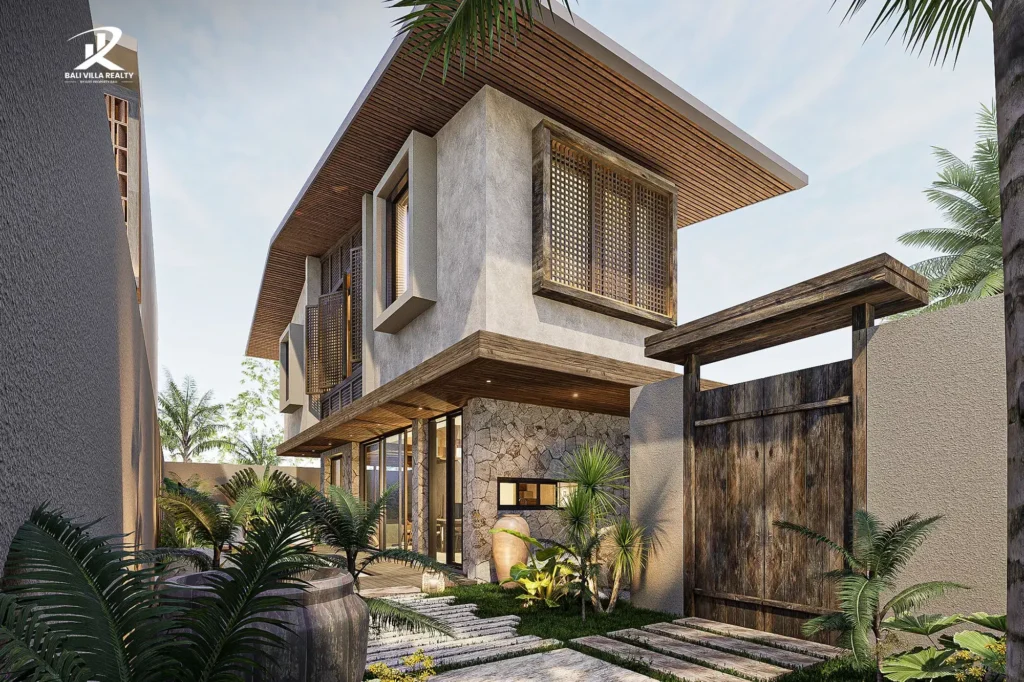
Wabi-Sabi minimalism is a design approach that values simplicity and the beauty found in imperfection. The concept originated in Japan, but in Bali villa design, Wabi-Sabi often blends with tropical style because both share a strong connection to nature.
This design philosophy resonates naturally with Bali’s landscape. Wabi-Sabi embraces natural materials like wood, bamboo, natural stone, and clay, which can age gracefully and develop more character over time.
It also commonly uses handmade ceramics, linen and other breathable fabrics, reclaimed or naturally finished timber, and muted earth tones. Local craftspeople often custom-make the furniture, adding another layer of character and authenticity to the space.
This is why Wabi-Sabi design is expected to work well for villas that aim to attract guests looking for a more authentic and peaceful lifestyle experience.
Read More: Building Your Bali Bamboo Villa: Guide & Cost Estimation
The Investment Appeal of Wabi-Sabi Minimalism
By integrating Wabi-Sabi elements, villa owners can create spaces that feel both luxurious and grounded. It can also be a strategic way to attract discerning guests looking for unique stays that reflect the essence of Bali, as well as an increasingly eco-conscious market.
Based on available data, Wabi-Sabi villas in Bali can generate around 8–14% net ROI, driven partly by growing interest in Bali wellness and slow-living aesthetics.
Areas with an established wellness market, such as Ubud, can therefore be particularly strategic locations for developing villas, resorts, or wellness businesses such as spas and yoga centers with a Wabi-Sabi design approach.
Villas Become More Flexible for Work and Longer Stays
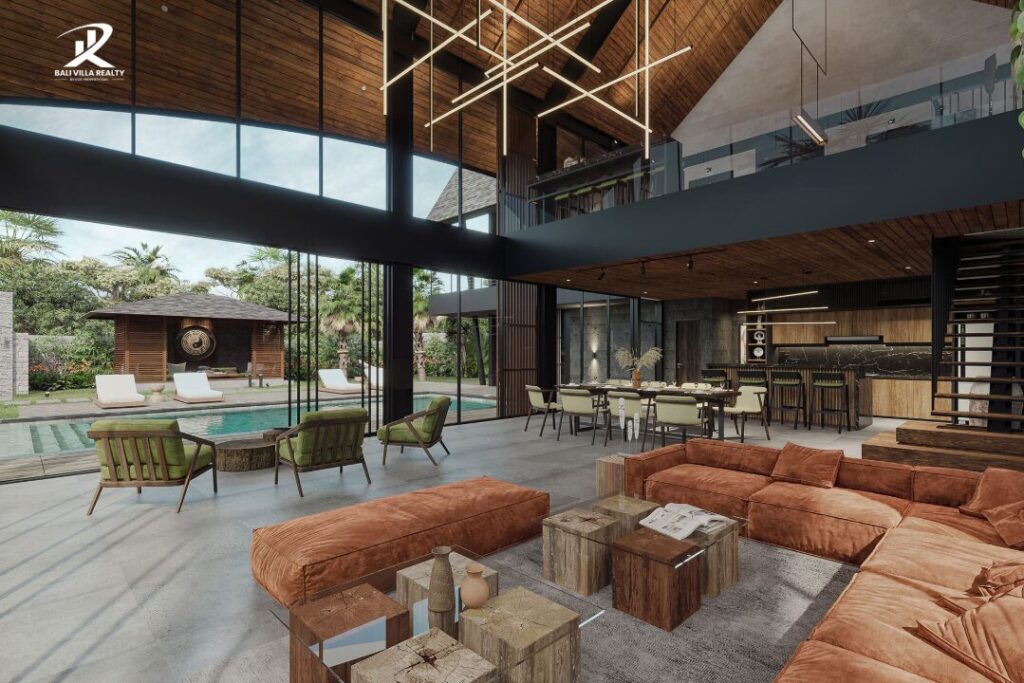
Bali’s market isn’t only focused on wellness. Demand from digital nomads coming to Bali is also expected to continue growing in 2027.
Between 2025 and 2026 alone, Bali’s growth as a global digital nomad hub accelerated considerably, with the population estimated at around 60,000 to 78,000 people. This creates stronger demand for digital-nomad-friendly villas.
Every nomad has different preferences. Some stay for weeks or months. Others combine holidays with remote work. Digital nomads traveling with families may need a quiet room, while groups may want different spaces they can use throughout the day. And that changes the floor plan.
However, designers don’t necessarily need to add a traditional office to every villa. Instead, they can create flexible spaces that perform more than one function. A quiet alcove beside the bedroom, for example, can become a workspace, while a guest room can double as a meeting room when needed.
Tropical Modernism Is Becoming More Climate-Responsive
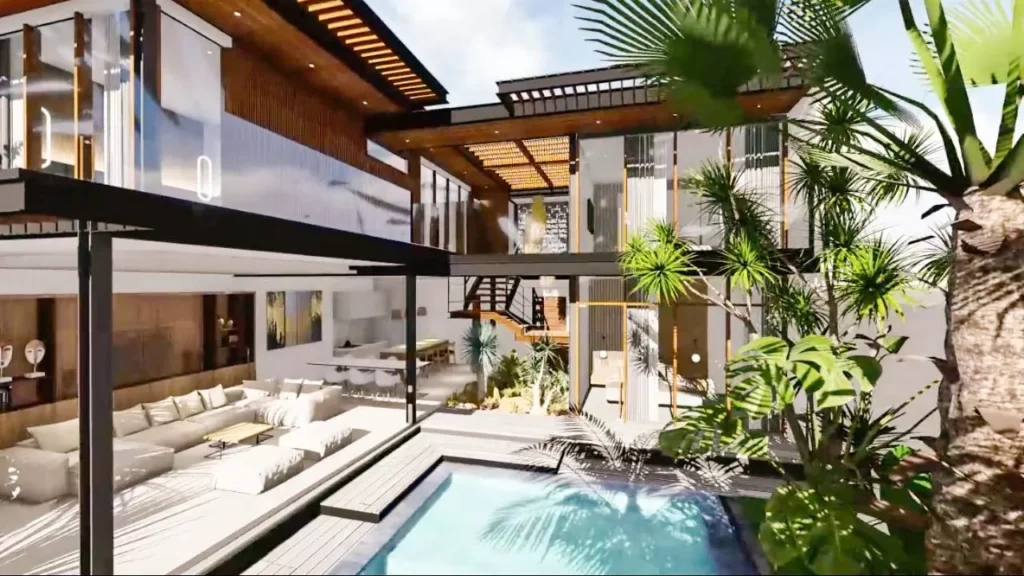
Indoor-outdoor living (open layout) has been part of Balinese architecture for years. In 2027, however, property design is expected to become even more nature-friendly and built around Bali’s climate from the beginning.
Characteristics we may see more often include deep roof overhangs, shaded terraces, cross-ventilation, screened façades, and courtyards. Room orientation can also be planned more carefully to catch prevailing breezes and natural light without sacrificing privacy.
The objective is to make the building naturally more comfortable before relying heavily on mechanical cooling.
Natural Materials Are Becoming the Luxury
The use of natural building materials is also expected to increase as sustainable design becomes more prominent. But that doesn’t mean filling every room with as many natural finishes as possible.
Many Bali villas already use natural materials such as timber, terrazzo, limestone, volcanic stone, polished concrete, rattan, bamboo, and textured plaster.
But that also creates another challenge: when everyone uses similar materials in similar ways, the final result can start to feel generic.
That’s why villa owners may need to work with professional local Bali architects who understand how to use these materials while still adding depth and character to the overall villa design.
What Is Driving Bali Villa Design in 2027?
The market offers more options now, and buyers know what they want. With all these choices, guests can find something that fits their needs, budget, and goals.
Properties that offer unique experiences, like themed stays or those focused on a special guest experience, often earn a much higher ROI—about 12% to over 25% per year. This is much higher than generic rental properties, which usually bring in 4% to 10% ROI per year.
When a property offers a unique experience, it stands out and is more likely to catch people’s attention. As a result, villa design is shifting from focusing on looks to creating memorable, high-performing guest experiences.
What May Start to Feel Dated in 2027?
- All-white minimalism without texture can make a villa feel visually flat, particularly when there is little material variation or landscaping.
- Very dark interiors can work in small doses, but excessive dark stone and timber can work against the natural light that makes tropical architecture so appealing.
- Glass-box architecture can look striking, but it may perform poorly when orientation, shade, heat, and ventilation haven’t been properly considered.
- Generic imported interior trends can make different villas feel interchangeable rather than connected to Bali.
- Designing purely for Instagram is becoming less convincing.
Conclusion
No single style will define Bali villas in 2027. But so far, the market is demanding more personalized, wellness-focused designs built around comfort, with approaches such as Wabi-Sabi minimalism and Tropical Modernism reflecting that shift.
One other thing seems clear: Bali villa design is becoming more intentional, rather than simply following a Pinterest aesthetic with no clear direction or purpose. For investors, this also means thinking beyond opening day.
Don’t worry. Plan your Bali villa design strategically with our senior local architect through a free, no-strings consultation. Let’s talk.
FAQ
Climate-responsive designs generally prioritize cross-ventilation, shade, deep roof overhangs, covered outdoor spaces, appropriate building orientation, tropical landscaping, and materials selected for humidity and heavy rainfall. Air conditioning can still provide comfort where needed, but good architecture can reduce unnecessary dependence on it.
Dedicated offices aren’t essential for every property, but reliable internet and flexible work spaces are increasingly useful, particularly for villas targeting longer stays and remote workers.
Contemporary villas can respond to Bali through climate-sensitive planning, courtyards, tropical landscaping, local materials, craftsmanship, natural ventilation, spatial hierarchy, and carefully selected art and furniture. The result can feel distinctly Balinese